
6061 Polished Aluminum sheet
A polished aluminum sheet is often described as a finish choice, something cosmetic-an aesthetic "upgrade" applied after the important engineering decisions have already been made. But with 6061 polished aluminum sheet, that framing is incomplete. The polish is not just a sheen; it is a public-facing statement about process control. It tells you something about the mill practice, the consistency of the base metal, the care taken during handling, and the intent of the fabricator. In many applications, the polished surface is the first feature people see, but the reason it performs well is rooted deeper: in alloy chemistry, temper, and the quiet discipline of standards.
From a practical standpoint, 6061 is the alloy you reach for when you want a sheet that behaves like a reliable coworker. It welds without drama, machines cleanly, takes forming with reasonable predictability, and-when specified correctly-holds up well in outdoor and industrial environments. Add polishing, and you've got a material that can look architectural while still functioning like a structural-grade aluminum.
Why 6061 is different when it's polished
Polishing does two things at once. It magnifies what's good and reveals what's careless.
A good polish highlights the uniformity of the substrate. If the sheet has inconsistent grain structure, rolling marks, or residual surface defects, polishing can make them more visible rather than hiding them. That's why polished 6061 is, in a way, more honest than mill finish. It demands better upstream quality: tight control of rolling, flattening, surface protection, and even packaging. When customers complain about "streaks," "cloudiness," or "ghost lines" on polished aluminum, the root cause is often not the polishing itself-it's a mismatch between the expected visual standard and the underlying sheet quality or temper selection.
The second effect is functional. A smoother surface can reduce dirt retention, improve cleanability, and support reflective or decorative purposes. It can also influence how coatings appear. If you plan to anodize after polishing, the final look becomes a negotiation between alloy composition, surface preparation, and anodizing parameters. 6061 generally anodizes well, but you should still anticipate that anodized color uniformity and brightness are sensitive to surface history and batch variation.
Temper is the hidden "personality" of the sheet
When people order 6061 polished aluminum sheet, they sometimes focus heavily on thickness and polish grade while treating temper as a small checkbox. In reality, temper often decides whether your project feels effortless or constantly fights you.
6061-T6 and 6061-T651 are common when strength and dimensional stability are needed. T651 is stress-relieved by stretching, which helps minimize distortion during machining. For sheet applications, T6 is widely stocked and provides high strength, but it is less forgiving in forming than softer tempers.
6061-T4 is solution heat-treated and naturally aged, offering improved formability compared with T6. If your polished sheet needs to be bent or shaped, T4 may reduce cracking risk, though you'll sacrifice some strength unless you subsequently heat treat.
6061-O is fully annealed and the easiest to form, but it's not the usual choice for a polished "final appearance" sheet unless the fabrication steps demand deep forming and you plan a subsequent finishing process.
Polished surface expectations should be aligned with temper. Harder tempers can show more pronounced micro-scratching during fabrication if handling isn't meticulous, while softer tempers may be more prone to denting. The best temper is not the strongest one; it's the one that matches your downstream operations.
Typical implementation standards and what they really mean
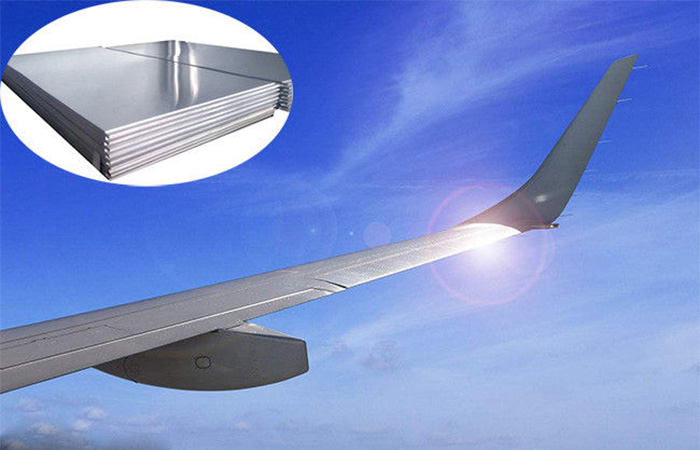
Purchasing polished 6061 sheet without a standard is like ordering "a precise part" without a tolerance. For most industrial supply chains, 6061 sheet and plate are commonly specified to ASTM standards. ASTM B209 covers aluminum and aluminum-alloy sheet and plate. For heat treatment definitions and temper designations, ANSI H35.1 is often referenced. If the application is aerospace-adjacent, additional requirements may apply, but 6061 sheet for general industrial and architectural use is usually handled under ASTM B209.
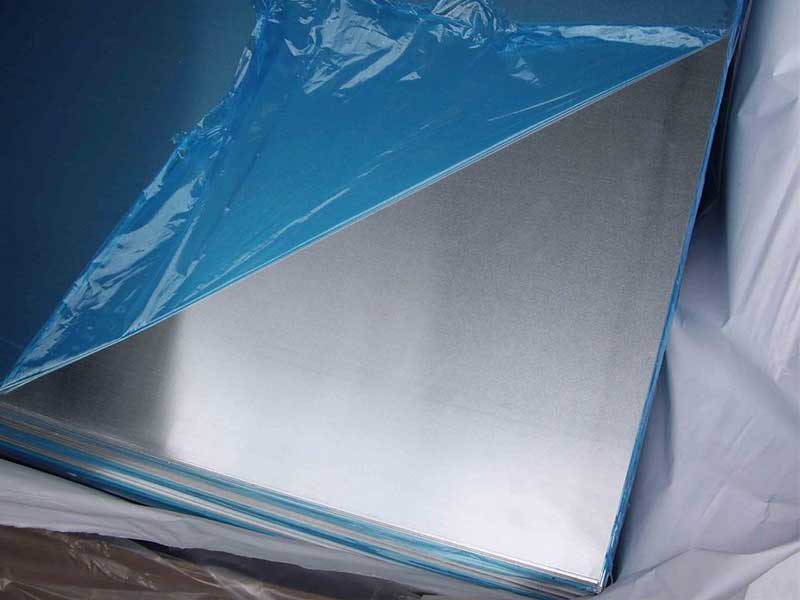
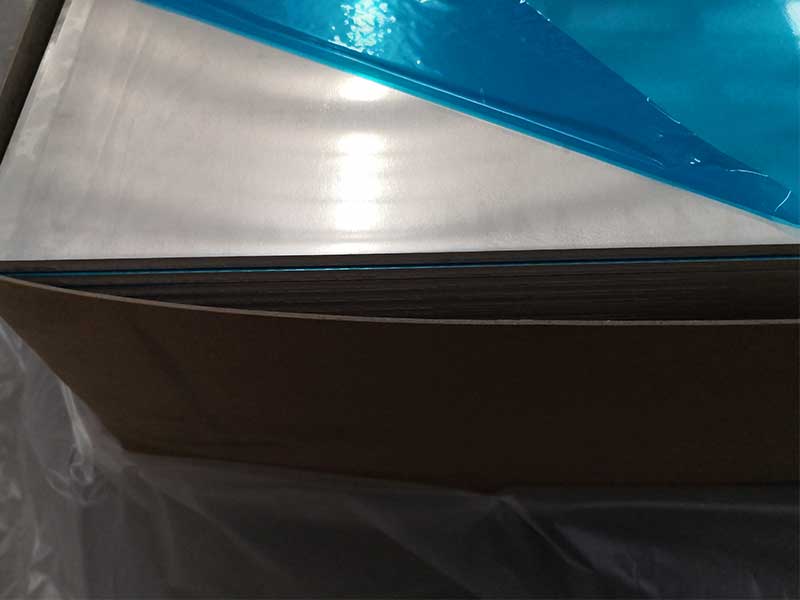
For surface finish, it's worth clarifying that "polished" can mean anything from a bright, directional mechanical polish to a mirror-like finish, depending on abrasive sequence and final buffing. Many suppliers provide a protective film; if appearance matters, specify film type and whether it must be laser-compatible or leave minimal adhesive residue.
How polishing is achieved and where problems begin
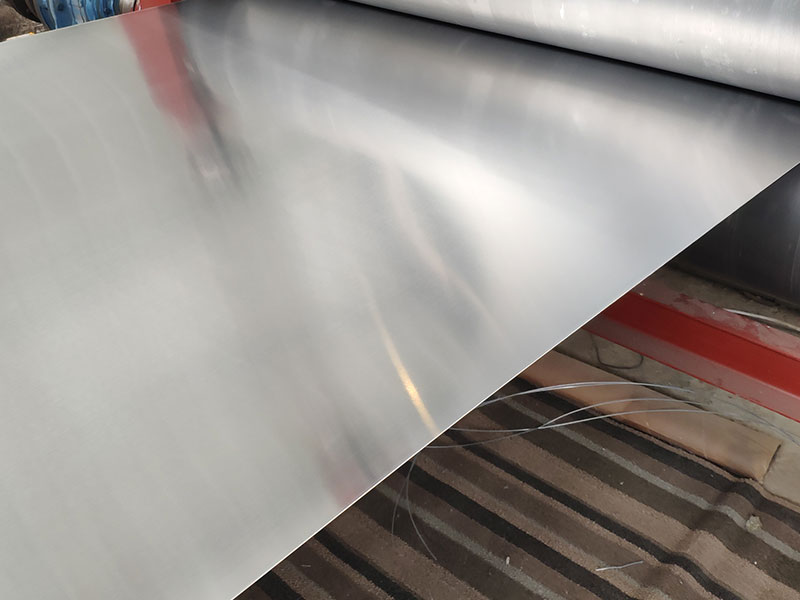
Mechanical polishing is typically a controlled abrasion process. You're not just making the sheet shiny; you're aligning and refining surface scratches to a consistent pattern. A "brushed" look is a form of polishing with visible grain direction. A brighter polish uses finer abrasives and buffing compounds to reduce visible scratch depth.
Trouble appears in predictable places: inconsistent pressure across wide sheets, grit contamination between abrasive stages, and handling scratches after polishing. It's common to see pristine polish ruined by a single careless lift or a rack with embedded debris. The polished sheet is not "delicate" in a metallurgical sense-it's simply unforgiving visually. If the finished part is customer-facing, treat logistics and storage as part of manufacturing, not an afterthought.
Mechanical and physical properties that guide real-world decisions
6061 is valued because it offers a strong balance: good strength-to-weight, corrosion resistance, and manufacturability. Typical properties depend on temper and product form, but the following ranges are widely used for engineering estimates.
Typical mechanical properties (room temperature, representative values)
| Property | 6061-T6 / T651 (typical) | 6061-T4 (typical) |
|---|---|---|
| Ultimate tensile strength | ~290 MPa | ~240 MPa |
| Yield strength | ~240 MPa | ~145 MPa |
| Elongation (varies with thickness) | ~8–12% | ~12–18% |
| Brinell hardness | ~95 HB | ~60 HB |
Typical physical properties
| Property | Typical value |
|---|---|
| Density | ~2.70 g/cm³ |
| Elastic modulus | ~69 GPa |
| Thermal conductivity | ~167 W/m·K |
| Electrical conductivity | ~40% IACS |
| Melting range | ~582–652°C |
These numbers are not just datasheet trivia. They influence whether a polished panel oil-cans, whether a machined bezel stays flat, whether a welded frame warps, and how heat spreads in an enclosure.
Chemical composition: the quiet reason anodizing and corrosion behavior differ
6061 belongs to the Al-Mg-Si family. Magnesium and silicon form Mg₂Si, which contributes to strength after heat treatment. Small amounts of copper and chromium refine properties further but also influence corrosion response and anodized appearance.
6061 aluminum alloy chemical composition (typical ASTM limits, wt.%)
| Element | Content (wt.%) |
|---|---|
| Si | 0.40–0.80 |
| Fe | ≤0.70 |
| Cu | 0.15–0.40 |
| Mn | ≤0.15 |
| Mg | 0.80–1.20 |
| Cr | 0.04–0.35 |
| Zn | ≤0.25 |
| Ti | ≤0.15 |
| Others (each) | ≤0.05 |
| Others (total) | ≤0.15 |
| Al | Balance |
This composition is part of why 6061 is a "safe bet." It resists many common corrosion scenarios well, especially when compared with alloys optimized solely for strength. Still, if the sheet will live in marine splash zones or aggressive chemical environments, you may want to discuss alternatives such as 5052 or 5083, or commit to an anodizing or coating strategy.
Practical selection notes from a fabricator's viewpoint
If I had to summarize 6061 polished aluminum sheet in one sentence, it would be this: it looks expensive, but it only stays that way if your process deserves it.
That means specifying the right protective film, defining acceptable cosmetic criteria, and ensuring your fabrication steps don't sabotage the finish. Use clean gloves, dedicated fixtures, and non-marring separators. Keep grain direction consistent across parts if you're using a directional polish; mismatched orientation can make identical parts look like they came from different projects.
If you plan to bend the sheet, test on the actual temper and thickness, and bend with the grain direction in mind. Polished surfaces show bend-line distortions more clearly, so tooling condition and radius selection matter. If you plan to weld, expect heat tint and surface disruption near the weld; polishing is rarely "weld-friendly" from an appearance perspective unless you're prepared for post-weld refinishing.
Closing thought: polish as proof of discipline
6061 polished aluminum sheet succeeds when appearance and engineering are treated as one conversation. The polish draws the eye, but the alloy and temper do the work. When the specification is clear-ASTM compliance, correct temper, defined surface expectations, and proper protection-6061 polished sheet becomes more than a shiny panel. It becomes a reliable surface you can build a brand on, and a reliable substrate you can build a product around.
https://www.aluminumplate.net/a/6061-polished-aluminum-sheet.html