
Embossed aluminum sheet ams 4035
When people hear the phrase embossed aluminum sheet AMS 4035, they often imagine a simple metal panel with a patterned surface. In practice, it is much more interesting than that. It is a material where alloy chemistry, aerospace specification discipline, surface geometry, and practical fabrication all meet in one product. From a designer's perspective, the embossed texture may look decorative. From a production engineer's perspective, it improves grip, disguises wear, and can change how a sheet behaves in service. From a quality manager's perspective, the real story begins with the standard behind it: AMS 4035.
A useful way to understand this material is to start from the inside and work outward. The core is not the embossing itself. The core is the alloy and temper defined by the AMS requirement, and the embossed pattern is the surface language applied to that foundation.
The meaning behind AMS 4035
AMS 4035 is an Aerospace Material Specification covering aluminum alloy 6061 sheet and plate in the annealed O temper. In practical supply terms, this means the base material is 6061-O aluminum, known for excellent formability in the annealed condition, good corrosion resistance, and the ability to be heat treated later when higher strength is needed.
This is important because embossing is not only a visual operation. It is a forming process. A sheet in the O temper accepts deformation far better than the same alloy in T6. If a manufacturer wants to create a clean, consistent embossed pattern without excessive cracking risk, the annealed temper offers a clear processing advantage. That is why the pairing of embossed surface and AMS 4035 base material can make technical sense, especially where post-forming or secondary fabrication is expected.
Flat metal is honest to a fault. It shows scratches, waviness, dents, handling marks, and installation mistakes. Embossed aluminum is more forgiving. The raised pattern interrupts reflected light, making minor defects less visible. In workshops, transport interiors, access covers, architectural trims, and industrial housings, this matters more than many buyers initially realize.
So the unique value of embossed aluminum sheet made from AMS 4035 / 6061-O is not just that it is aluminum with a texture. It is that it combines formability, repair tolerance, visual durability, and later heat-treatment potential. It behaves like a practical material for real environments rather than a showroom-only product.
Typical alloy and temper details
The base alloy is AA 6061, a magnesium-silicon heat-treatable aluminum alloy. In the O temper, it is fully annealed. This gives the sheet lower strength than T4 or T6, but much better ductility.
Here is a commonly referenced chemical composition range for 6061 aluminum alloy:
| Element | Composition (%) |
|---|---|
| Silicon (Si) | 0.40 – 0.80 |
| Iron (Fe) | 0.00 – 0.70 |
| Copper (Cu) | 0.15 – 0.40 |
| Manganese (Mn) | 0.00 – 0.15 |
| Magnesium (Mg) | 0.80 – 1.20 |
| Chromium (Cr) | 0.04 – 0.35 |
| Zinc (Zn) | 0.00 – 0.25 |
| Titanium (Ti) | 0.00 – 0.15 |
| Aluminum (Al) | Remainder |
Typical mechanical properties for 6061-O sheet are often in the following range, though actual certified values must come from the mill test report and the applicable revision of the specification:
| Property | Typical Value |
|---|---|
| Tensile Strength | about 18 ksi / 125 MPa |
| Yield Strength | about 8 ksi / 55 MPa |
| Elongation | about 20 – 25% |
| Brinell Hardness | about 30 HB |
These values explain why this temper is favored for forming operations. The sheet is soft enough to accept embossing, bending, shallow drawing, and contouring with reduced risk of fracture.
What embossing changes
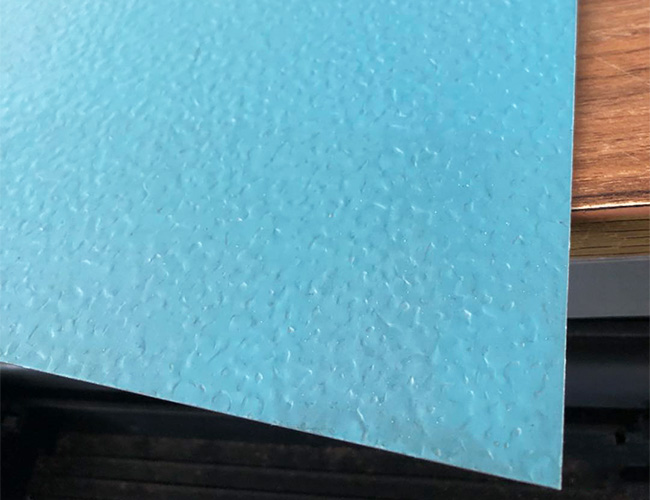
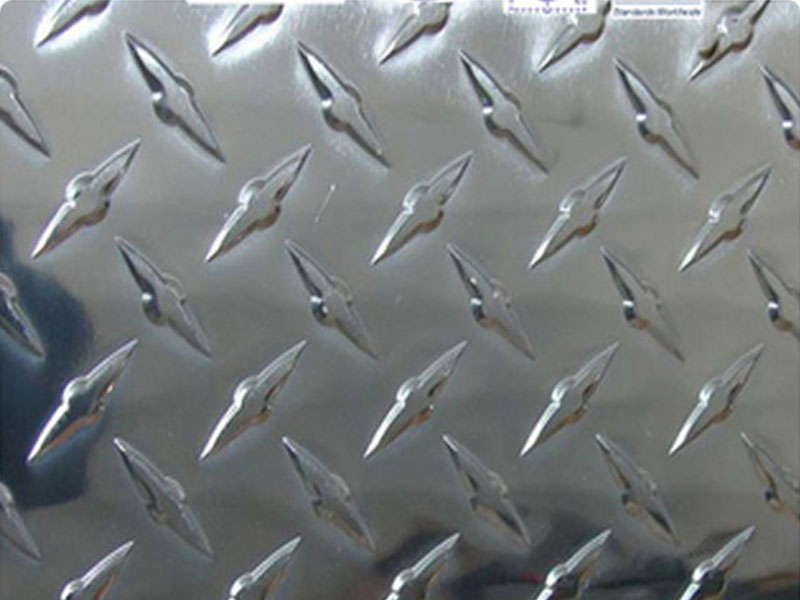
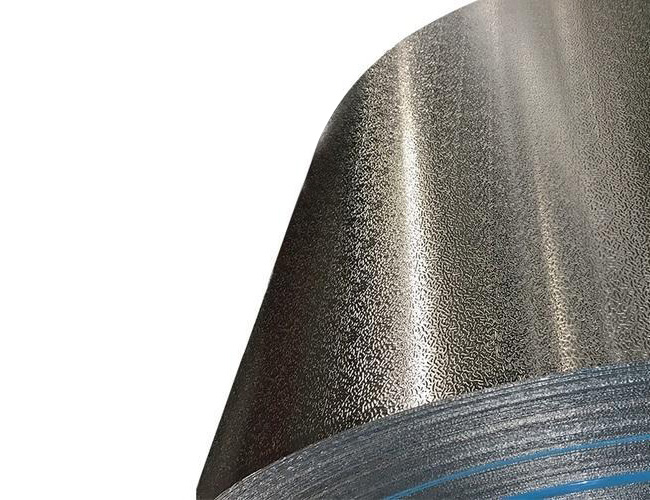
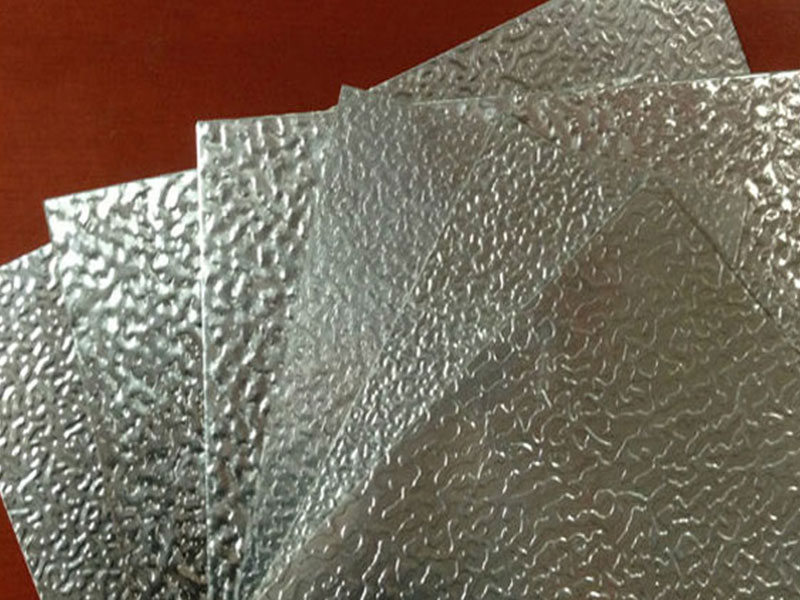
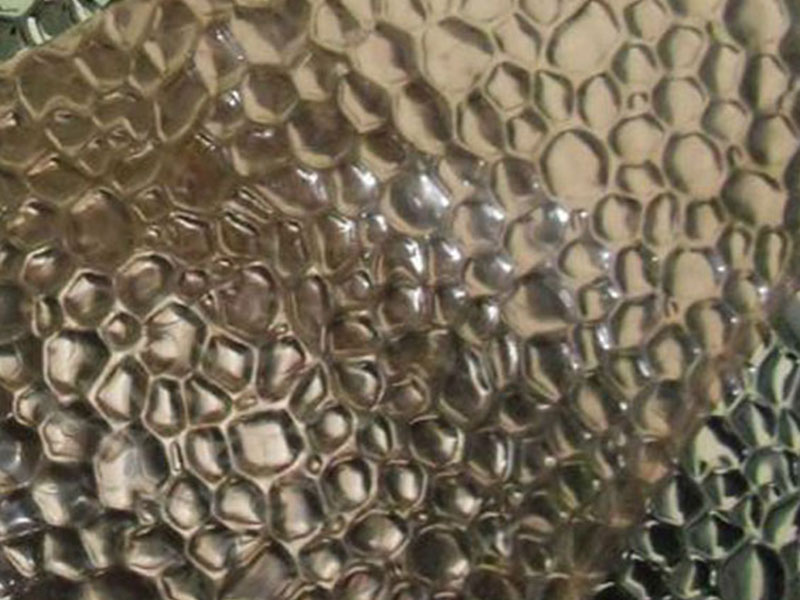
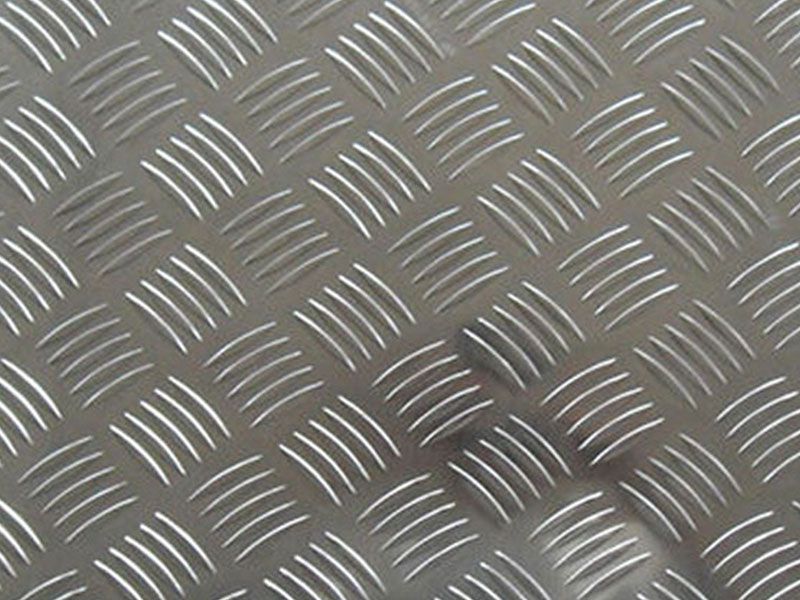
Embossing presses a repeat pattern into the aluminum surface by passing the sheet through matched rollers or a shaped press tool. Common patterns include stucco, pebble, diamond-like textures, orange-peel effects, or custom industrial patterns.
Although the embossing does not fundamentally change the alloy chemistry, it does alter the sheet in several practical ways.
It increases local rigidity. A textured sheet often feels stiffer than a plain sheet of the same thickness, especially in light-gauge applications.
It reduces visible surface damage. Scratches and abrasion are less obvious because the pattern breaks up reflections.
It can improve handling safety. Some embossed patterns provide better grip than smooth sheet, especially where gloves, moisture, or oil are involved.
It influences coating behavior. Paint, anodizing, and other finishes may look different on an embossed surface than on a mill-finish flat sheet because the light scattering is different.
At the same time, embossing also introduces forming history into the sheet. This means buyers should pay attention to depth of pattern, thickness tolerance after embossing, and whether the stated thickness is measured before or after pattern formation. In serious procurement work, that detail should never be left vague.
Dimensions, thickness, and practical supply considerations
Embossed aluminum sheet based on AMS 4035 / 6061-O is commonly discussed in gauges and metric thicknesses such as 0.5 mm, 0.8 mm, 1.0 mm, 1.2 mm, 1.5 mm, 2.0 mm, 2.5 mm, and 3.0 mm, though actual aerospace-oriented stock sizes may differ depending on the mill and service center. Standard widths may include 1000 mm, 1220 mm, 1250 mm, and 1500 mm, with lengths cut to order or supplied in standard sheet dimensions.
For critical applications, the customer should verify several points before ordering:
- base alloy certified as 6061 to AMS 4035
- temper clearly stated as O
- embossing pattern type and depth
- thickness measurement method
- flatness or coil-set expectations after embossing
- protective film requirement
- finish condition such as mill finish, anodized, or coated
In industries where traceability matters, the embossed pattern should never obscure the importance of paperwork. The certificate package is often as important as the sheet itself.
Standards and implementation notes
For material control, AMS 4035 is the primary reference for the base sheet or plate. Depending on the project, additional standards may also be relevant during purchasing, fabrication, or inspection, such as general aluminum alloy designation rules under AA/ASTM systems, dimensional tolerances under agreed commercial standards, and surface quality requirements defined by customer drawing.
If the material is later heat treated after forming, processing may refer to aerospace or plant-specific heat-treatment procedures. Because 6061-O is a heat-treatable alloy, it can be solution heat treated and artificially aged to achieve stronger tempers such as T4, T42, T6, or T62, subject to part geometry and process control. That flexibility gives embossed 6061-O a strategic advantage in parts that must first be shaped and later strengthened.
However, there is a practical caution here. If an embossed pattern is functionally important, later heat treatment and finishing steps should be validated so the texture is not degraded, distorted, or filled by coating buildup.
Corrosion behavior and service environment
6061 is respected for its good general corrosion resistance. In indoor, transportation, and many industrial environments, it performs reliably. In marine exposure or chloride-rich settings, it is better than some high-strength aluminum alloys, though not completely immune to pitting or crevice attack. Surface treatment can improve its durability further.
For embossed sheet, the peaks and valleys of the pattern create more surface area. In clean service this is not a problem. In dirty, wet, or chemically active environments, it can mean contaminants are retained more easily. This is a small but important operational detail. A textured surface that improves traction may also require more deliberate cleaning.
Where this material makes the most sense
Embossed aluminum sheet with an AMS 4035 6061-O base is especially attractive where fabrication flexibility matters. It suits applications such as interior panels, protective covers, equipment skins, transport flooring in lighter-duty areas, decorative-industrial trim, housings, access panels, and formed components that benefit from a textured appearance.
It is less about maximum strength in its delivered condition and more about manufacturing intelligence. The material arrives soft, formable, corrosion resistant, and visually practical. It can be shaped with less drama than harder tempers. It can later be upgraded through heat treatment if the design allows. That gives engineers and fabricators room to work.
Final thought
The most interesting thing about embossed aluminum sheet AMS 4035 is that it quietly solves several problems at once. It is not merely patterned metal. It is a blend of metallurgical softness, surface practicality, and specification-backed reliability. The embossing helps the sheet live better in the visible world of handling and wear. The AMS 4035 base helps it perform better in the disciplined world of material control and fabrication.
That combination is why this material deserves a closer look. It is not loud, exotic, or mysterious. It is simply smart aluminum: textured on the surface, but carefully defined at the core.
https://www.aluminumplate.net/a/embossed-aluminum-sheet-ams-4035.html