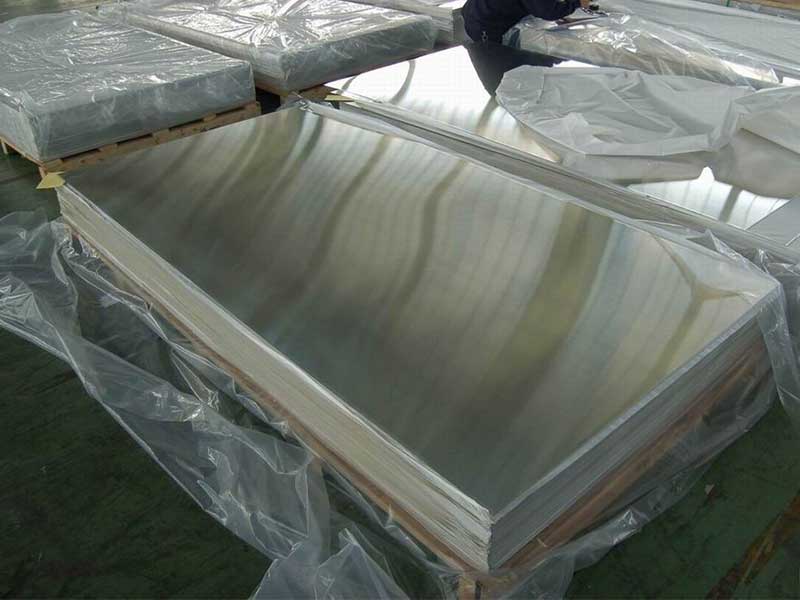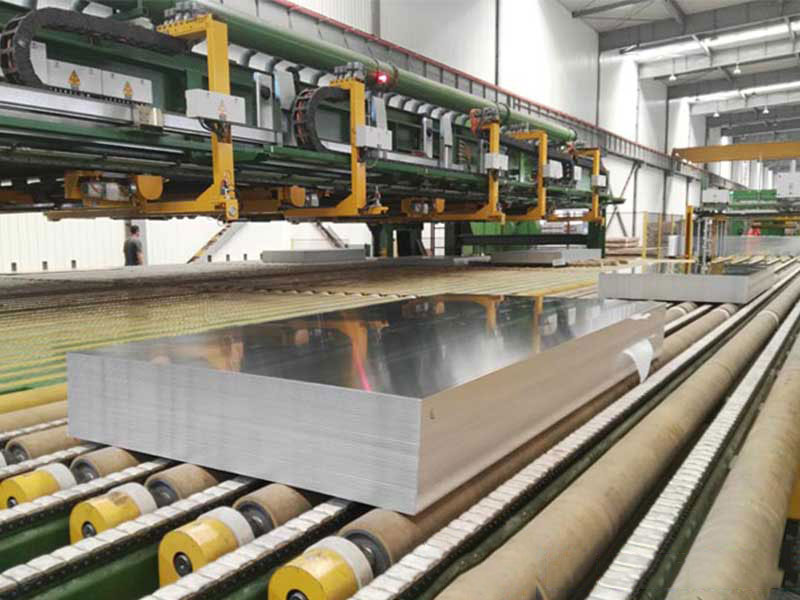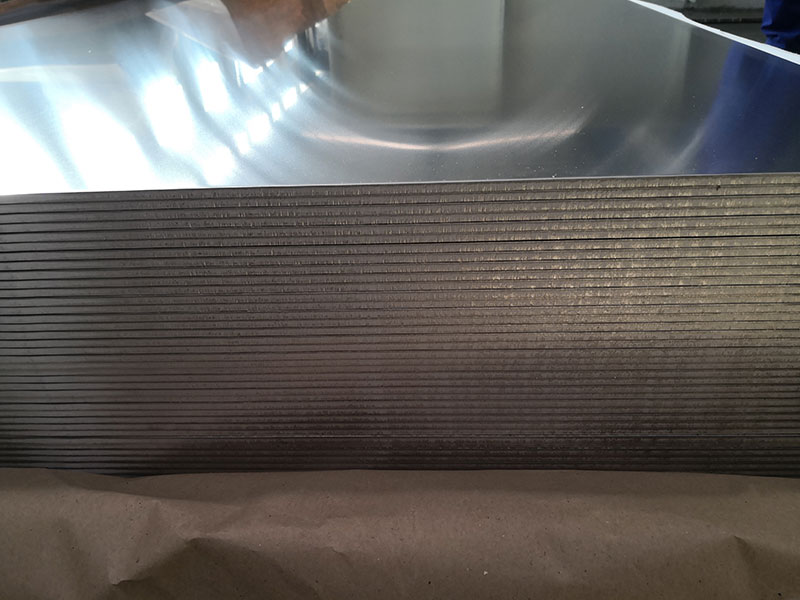

Aluminum sheet plate for heat sink
Aluminum Sheet Plate for Heat Sink: Thinking Like Heat, Not Like Metal
When customers ask for "aluminum sheet plate for heat sink," they often picture a simple raw material that will eventually become fins, cold plates, LED boards, inverter bases, or battery cooling parts. But aluminum for thermal management is less about being "a sheet" and more about behaving like a reliable highway for heat: it must accept heat quickly, spread it evenly, and keep doing that after machining, stamping, brazing, anodizing, and years of thermal cycling.
From a heat-sink designer's perspective, the best aluminum plate is the one that stays predictable. Predictable thermal conductivity, predictable flatness under stress, predictable corrosion response, and predictable mechanical performance when you cut thin fins or drill dense hole patterns. That is why alloy choice, temper, standards, and even chemistry matter as much as thickness.
Why aluminum dominates heat sink sheet and plate
Aluminum sits in the sweet spot between thermal performance, weight, and manufacturability. Copper conducts heat better, but it is heavier, costlier, harder to extrude into complex fin shapes, and can complicate corrosion control. Aluminum's advantage is system-level efficiency: it can be formed, extruded, milled, stamped, friction-stir welded, or brazed into high-volume parts while maintaining stable thermal behavior.
Thermal conductivity in common heat-sink alloys typically ranges from about 120–220 W/m·K depending on alloy family and temper. The goal is not only "high conductivity," but consistent conductivity across batches and across the thickness direction so heat spreading remains uniform.
Alloy selection: conductivity vs strength vs surface treatment
Most heat sink sheet/plate applications center on a few proven alloy families:
1xxx series (e.g., 1050, 1060, 1070, 1100)
These are the "heat spreader" choices. With very low alloying content, they tend to offer excellent thermal conductivity and great formability. If your heat sink design depends on rapid spreading-like LED MCPCB heat spread plates, laminated thermal stacks, or thin stamped parts-1xxx can be ideal. The trade-off is lower strength, so mechanical rigidity often requires thicker sections or supportive design.
3xxx series (e.g., 3003)
Chosen when you need better strength than pure aluminum and excellent forming with stable corrosion resistance. Conductivity is lower than 1xxx, but for many stamped or drawn heat sink shells, it's a practical balance.
6xxx series (e.g., 6061, 6063)
This is the workhorse family when strength and machinability are priorities. Many CNC heat sinks, cold plates, and structural thermal parts use 6061 because it holds threads, tolerances, and flatness better after machining. Thermal conductivity is typically lower than 1xxx, but mechanical stability often improves real-world thermal contact by keeping surfaces flatter under load.
A subtle but important point: the "best" conductivity on paper can be lost in assembly if the plate warps, the surface finish is inconsistent, or flatness is poor. A slightly lower-conductivity alloy that stays flat and machines cleanly can outperform in actual thermal interface conditions.
Typical parameters customers specify (and why they matter)
Heat sink sheet plate procurement usually revolves around a compact set of parameters that strongly influence performance and yield:
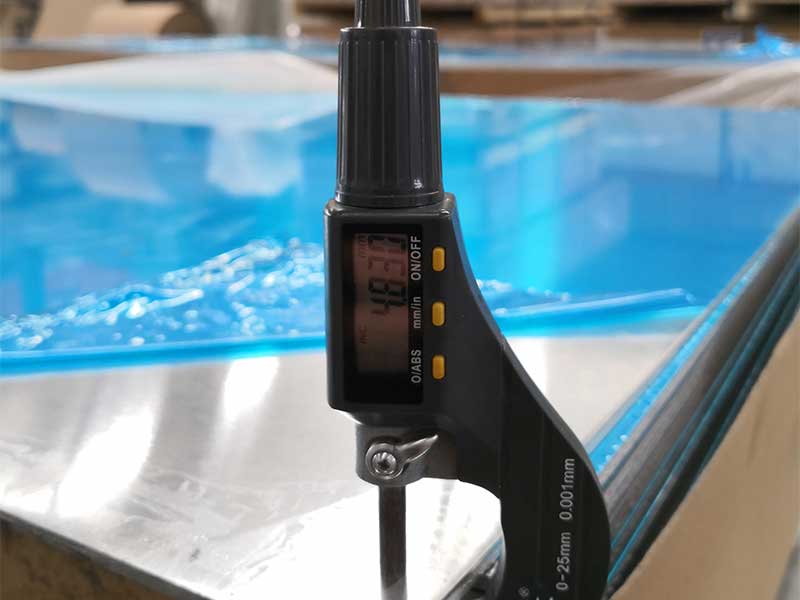
Thickness commonly ranges from 0.5 mm to 25 mm depending on stamped fin stock, heat spread plates, or machined bases. Thinner material emphasizes formability and surface quality; thicker plate emphasizes internal soundness and flatness.
Width and length depend on cutting and nesting efficiency. Many buyers prioritize stable tolerances to reduce CNC probing time and improve automated assembly.
Flatness and residual stress matter especially for machined heat sinks and cold plates. If the plate carries high internal stress, it can move after milling, turning a "flat" base into a thermal-contact problem.
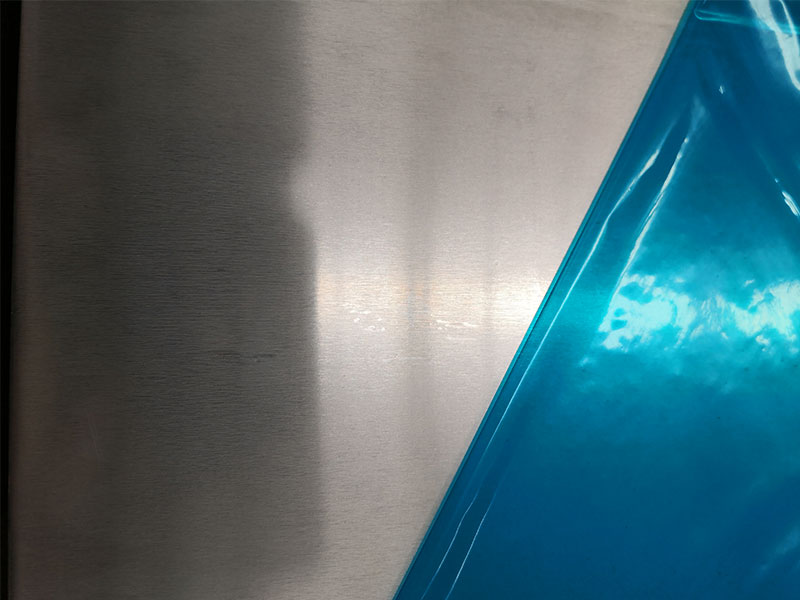
Surface condition and finish affect anodizing consistency, thermal interface performance, and cosmetic expectations. For power electronics, clean, uniform surfaces reduce rework.
Temper choices: performance is "heat-treated" into the metal
Temper is where the same alloy can behave like two different materials.
O temper (annealed) is soft, formable, and friendly for deep drawing or aggressive stamping of fin patterns. It is common for 1xxx and 3xxx when forming dominates.
H tempers (strain-hardened) like H14 or H24 are used for sheet where moderate strength and stable geometry are desired without full heat treatment.
T tempers (heat-treated) like T6 or T651 are typical for 6061 plate. T6 delivers high strength; T651 is stress-relieved by stretching, improving dimensional stability during machining. For heat sink bases that need flatness after pocket milling or channel machining, 6061-T651 is often preferred.
Implementation standards that buyers recognize
Heat sink aluminum sheet and plate are commonly produced and inspected to established standards, which help ensure consistent chemistry, mechanical properties, and dimensional tolerances.
ASTM B209 is widely used for aluminum sheet and plate.
EN 485 (sheet/plate) is common in European supply chains.
JIS H4000 / JIS H4040 appear frequently in Asia-Pacific projects.
RoHS and REACH compliance are often required for electronics markets, especially for consumer and industrial power products.
For thermal-management parts, customers may also add internal requirements such as ultrasonic inspection for thick plate, or tighter flatness tolerances for CNC bases.
Thermal and chemical behavior: what chemistry tells you about heat
Aluminum's thermal conductivity is strongly influenced by alloying additions. Elements like Si, Mg, Mn, Cu, and Zn improve strength or processing, but they generally reduce conductivity compared to purer aluminum. That's why 1050/1060 often win on conductivity while 6061 wins on strength and machining stability.
Corrosion behavior also tracks chemistry and surface treatment. Anodizing improves corrosion resistance and electrical insulation, but it can slightly add thermal resistance at the surface. Many designs accept this trade-off when electrical isolation or long-term durability is critical.
Chemical composition table (typical limits, wt.%)
Below are commonly referenced chemistry limits; exact limits depend on the governing standard and supplier certification.
| Alloy | Si | Fe | Cu | Mn | Mg | Zn | Ti | Al |
|---|---|---|---|---|---|---|---|---|
| 1050 | ≤0.25 | ≤0.40 | ≤0.05 | ≤0.05 | ≤0.05 | ≤0.05 | ≤0.03 | ≥99.50 |
| 1060 | ≤0.25 | ≤0.35 | ≤0.05 | ≤0.03 | ≤0.03 | ≤0.05 | ≤0.03 | ≥99.60 |
| 1100 | ≤0.95 (Si+Fe) | - | 0.05–0.20 | ≤0.05 | - | ≤0.10 | - | ≥99.00 |
| 3003 | ≤0.60 | ≤0.70 | ≤0.05–0.20 | 1.0–1.5 | ≤0.10 | ≤0.10 | - | Balance |
| 6061 | 0.40–0.80 | ≤0.70 | 0.15–0.40 | ≤0.15 | 0.80–1.20 | ≤0.25 | ≤0.15 | Balance |
Practical recommendations for choosing heat sink sheet plate
If your part is a heat spreader where conductivity is the headline requirement, consider 1050/1060 in O or H tempers, paired with controlled flatness and clean surface.
If you are stamping or forming and need consistent mechanical behavior with good corrosion resistance, 3003 in O/H tempers is a dependable option.
If your heat sink is machined, threaded, or structurally loaded, 6061-T6 or 6061-T651 plate is often the safest choice for dimensional stability and strength, especially in thicker sections.
What customers should ask a supplier before buying
Heat sink performance is rarely limited by alloy name alone. Ask about actual temper certification, thickness tolerance capability, flatness control, stress-relief availability, surface quality for anodizing, and batch-to-batch consistency. A supplier that understands thermal parts will talk about machining deformation, contact flatness, and how plate quality affects real thermal resistance-not just chemical limits.
Aluminum sheet plate for heat sinks is not merely raw stock. It is the starting point of a thermal pathway. Choosing the right alloy and temper is how you make heat move with less resistance, fewer surprises, and better long-term reliability.
https://www.aluminumplate.net/a/aluminum-sheet-plate-for-heat-sink.html