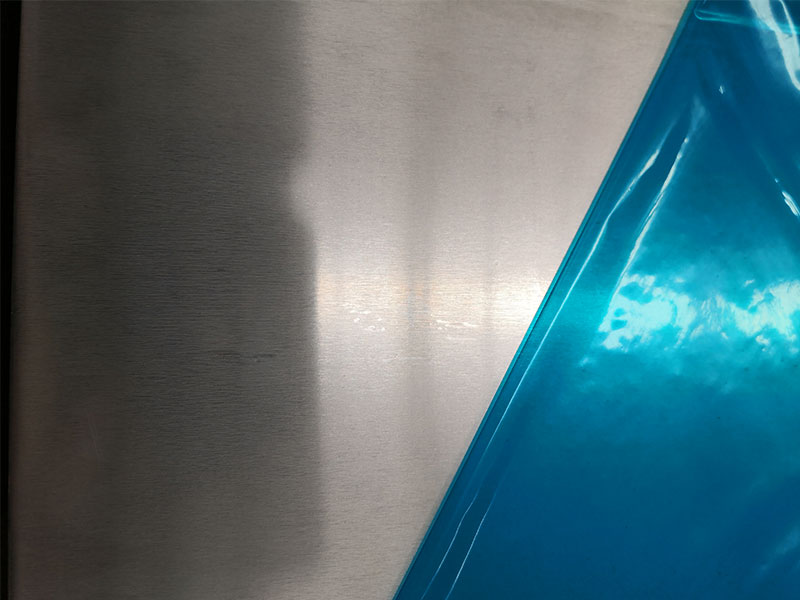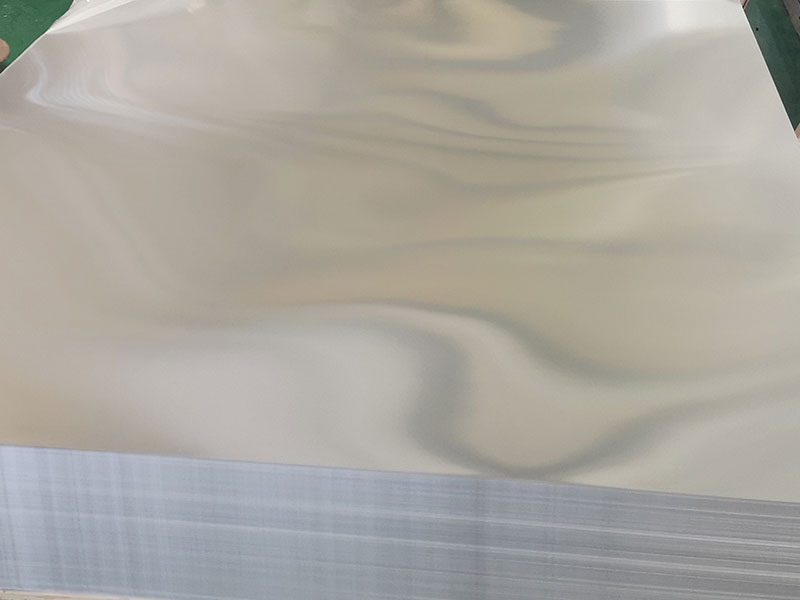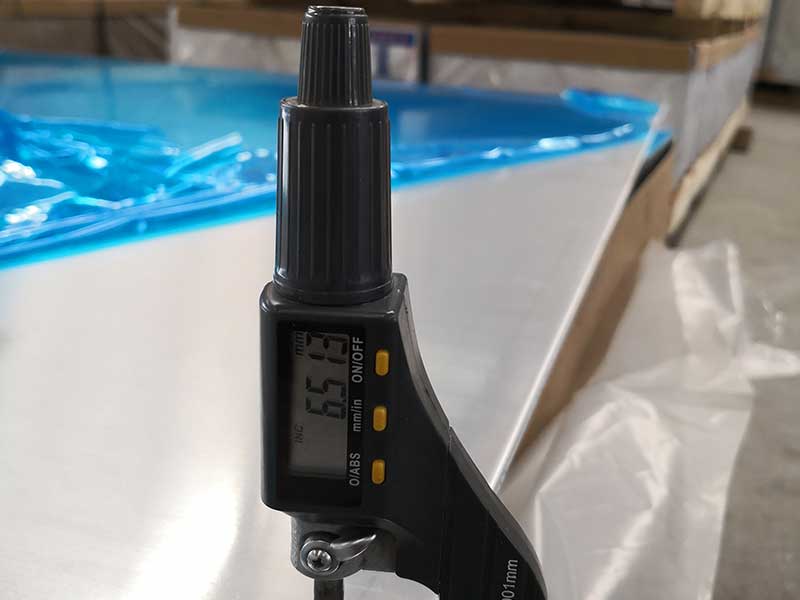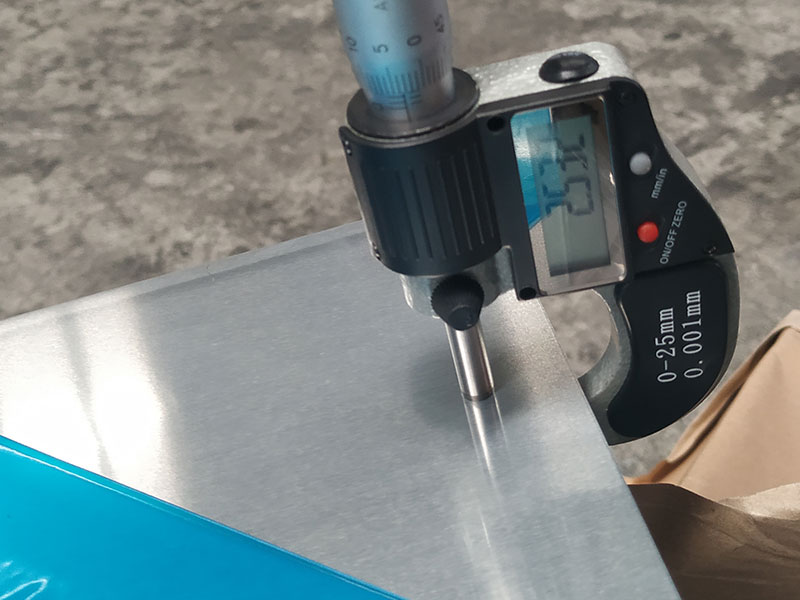

Deep drawing aluminum sheet 1070-ho
Deep drawing is often described as a "forming process," but for many manufacturers it's better understood as a reliability test: the material must flow smoothly, resist tearing at the punch radius, tolerate ironing, and still deliver a clean surface that accepts finishing. 1070-HO aluminum sheet (more commonly written as 1070-O, meaning fully annealed) is built for exactly that kind of demanding, shape-driven production. With ultra-high purity aluminum and a soft temper, it behaves less like a rigid sheet and more like a controlled, predictable metal "skin" that can be coaxed into cups, shells, and housings with stability.
From a distinctive viewpoint, 1070-O's real function in deep drawing is not just "good ductility." It is the ability to keep deformation uniform across the part so the process window stays wide-less sensitivity to minor lubrication changes, tool wear, or small differences in blank holding force. This stability is why many high-volume producers choose 1070-O for components where appearance, cleanliness, and formability matter as much as strength.
What 1070-O is, and why purity changes deep drawing behavior
Because it is in the O temper, the sheet is fully annealed. The microstructure is soft and accommodating, allowing high plastic deformation before failure. For deep drawing operations where the blank must travel a long distance into the die, this temper is often the baseline choice.
Functions that matter on the shop floor
A deep drawing sheet is judged by what it prevents: tearing, wrinkling, orange peel, and inconsistent wall thickness. 1070-O supports these functions naturally:
Stable metal flow and high drawability
Low alloy content supports a consistent strain distribution. That helps achieve deeper draws or fewer stages in multi-step tooling, improving productivity.
Surface cleanliness and finishing friendliness
1070 is widely selected when the final part will be anodized, brushed, polished, or used in reflective applications. Its purity contributes to uniform appearance and color response after finishing.
High electrical and thermal conductivity
This is a function you "inherit" for free in deep drawn parts. When the drawn component also acts as a conductive shell, heat spreader, or current-carrying element, 1070 offers outstanding performance.
Corrosion resistance in everyday environments
Pure aluminum forms a stable oxide layer, supporting long-term durability for consumer goods, packaging, and indoor industrial components.
Typical applications for deep drawing 1070-O aluminum sheet
1070-O is most compelling when the part is thin-walled, appearance-sensitive, or conductive:
Battery and capacitor housings, can-like shells, and sleeves where forming consistency and conductivity are both important
Lighting reflectors and decorative housings where surface finish uniformity matters
Kitchenware and consumer products such as cups, covers, and enclosures requiring smooth deep drawn walls
Thermal management shells, heat shields, and covers in appliances or electronics
Chemical and food-contact style containers in controlled environments where cleanliness and corrosion resistance are valued
When higher strength is needed after forming, manufacturers often draw in O temper and then consider post-forming treatments or structural design changes rather than switching away from 1070's purity.
Parameters customers typically specify
Deep drawing success starts with correct sheet parameters. Common order and process parameters include:
Alloy: AA 1070
Temper: O (annealed)
Thickness range (typical deep drawing use): 0.2–3.0 mm (many applications concentrate around 0.3–1.5 mm)
Width/length: cut-to-length sheet, slit coil, or coil depending on press feeding
Surface: mill finish, brushed, or special roughness control depending on lubrication strategy
Grain/anisotropy control: earing behavior depends on rolling texture; consistent production lots help maintain stable trim allowances
Lubrication compatibility: purity influences friction behavior; matching surface roughness and lubricant type reduces galling and scratches
In deep drawing, customers often care as much about earing rate, thinning profile, and surface defect sensitivity as they do about strength numbers. A supplier that controls rolling and annealing consistently can reduce press-side adjustments and scrap.
Implementation standards and commonly referenced specifications
1070 aluminum sheet for forming is commonly supplied under recognized aluminum standards. Typical references include:
ASTM standards such as ASTM B209 for aluminum and aluminum-alloy sheet and plate (widely used in international trade)
EN standards such as EN 485 series for aluminum sheet/strip properties and tolerances (common in Europe)
JIS standards such as JIS H4000/H4160 family depending on product form (common in Japan/Asia supply chains)
GB/T standards may apply in China-based procurement contexts depending on the supplier and product form
Actual compliance depends on the mill and product scope, so it's best to confirm the exact standard on the quotation and mill test certificate.
Alloy tempering and related conditions
The temper code is not a detail-it is the forming strategy.
O temper (annealed)
Maximum formability and deep draw performance; lowest strength; best choice for deep drawn cups and shells.
H tempers (strain-hardened)
Higher strength, lower ductility; used when shallow forming is needed or when stiffness is prioritized. For deep drawing, H tempers typically narrow the safe process window and raise risk of tearing unless tooling and draw depth are moderate.
Many manufacturers intentionally select 1070-O for forming, then use design features (ribs, flanges) or post-process steps rather than starting with a harder temper.
Chemical composition (typical limits)
AA 1070 is defined primarily by purity. The exact allowable limits can vary slightly by standard; the table below reflects commonly used composition expectations for 1070.
| Element | Typical limit (wt. %) |
|---|---|
| Al | ≥ 99.70 |
| Si | ≤ 0.20 |
| Fe | ≤ 0.25 |
| Cu | ≤ 0.04 |
| Mn | ≤ 0.03 |
| Mg | ≤ 0.03 |
| Zn | ≤ 0.04 |
| Ti | ≤ 0.03 |
| Others (each) | ≤ 0.03 |
| Others (total) | ≤ 0.10 |
A distinctive way to evaluate 1070-O: think "process insurance"
When selecting deep drawing material, engineers often focus on tensile strength and elongation. With 1070-O, the more useful question is: how much variability can your process tolerate? Because 1070-O flows evenly and responds predictably to deformation, it acts like "process insurance" for high-speed presses and multi-cavity tooling-especially when surface appearance is part of the specification.
For buyers, the best results come from pairing the sheet with consistent coil-to-coil texture control, appropriate lubrication, and tooling polished for aluminum. With those in place, deep drawing aluminum sheet 1070-O becomes an elegant solution: pure, soft, highly drawable, and ready to become the thin-walled shapes that modern products depend on.
https://www.aluminumplate.net/a/deep-drawing-aluminum-sheet-1070-ho.html