
Expandable aluminum sheet
Expandable aluminum sheet is a material with a quiet superpower: it starts life as an ordinary aluminum sheet, then transforms into a lightweight, open-area structure that behaves like a skin and a skeleton at the same time. If you've ever needed a surface that can breathe, drain, grip, shade, diffuse, or reinforce-without adding much weight-expandable aluminum sheet is often the elegant answer. It is widely known as expanded aluminum sheet or aluminum expanded metal, but the "expandable" idea captures what makes it special: a controlled expansion process creates strength and function out of negative space.
A different way to think about it: "structure made from air"
Most sheet products add performance by adding mass-thicker gauge, heavier plate, more ribs. Expandable aluminum sheet takes the opposite route. It gains stiffness through geometry. The expansion forms a repeating diamond (or custom) pattern that creates a truss-like behavior. You're not just buying a sheet; you're buying an engineered pattern that can be tuned for traction, airflow, privacy, light control, and load distribution. This is why it shows up in walkways, platforms, machine guards, HVAC screens, architectural facades, filtration supports, anti-slip steps, and battery or enclosure ventilation panels.
How it's made, in plain terms
Expandable aluminum sheet is produced by slitting the sheet in a precise pattern and then stretching it. No chips, no scrap, no welded joints. The metal flows into a mesh-like structure. Two common surface conditions are:
- Standard expanded (raised) sheet: strands are slightly angled, offering extra grip and rigidity.
- Flattened expanded sheet: the sheet is rolled after expansion for a smoother, more uniform thickness-useful for cladding, screens, and applications needing a flatter profile.
Because it is made from a single piece of metal, it keeps continuity and avoids weak points found in some welded meshes.
parameters customers actually use
Most purchasing decisions come down to a few measurable terms. Your supplier should define them clearly.
SWD and LWD (Short Way of Diamond and Long Way of Diamond) describe the diamond opening size. Smaller openings provide more support and a more "closed" look; larger openings maximize airflow and reduce weight.
Strand width and strand thickness describe the metal "ribs" of the pattern. Wider strands generally improve durability and stiffness, while thinner strands reduce weight and can improve formability.
Open area is the percentage of void. Higher open area improves ventilation, drainage, and light passage; lower open area improves shielding and provides a more solid appearance.
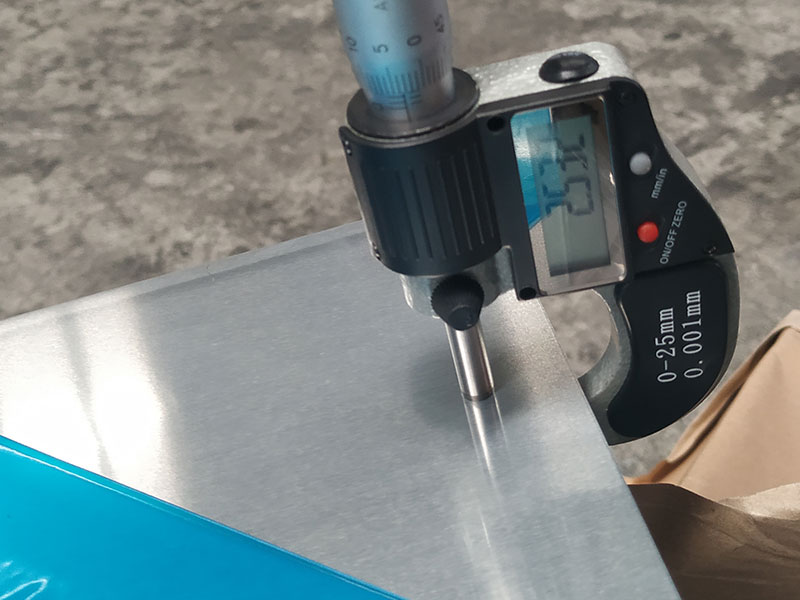
Sheet thickness and overall thickness can differ. Expanded sheet starts from a base thickness, but the expansion changes the geometry; raised expanded products may have a higher overall profile than the original sheet.
Typical production ranges vary by mill and pattern, but many commercial expanded aluminum sheets are made from base thicknesses around 0.5–6.0 mm, with a wide choice of SWD/LWD patterns and sheet sizes such as 1000×2000 mm, 1220×2440 mm, 1500×3000 mm, and custom coils/sheets when available.
Implementation standards and what "good" looks like
Expanded metal products are commonly referenced under expanded-metal classifications such as those aligned with ASTM-style specifications used in many markets, and under general aluminum sheet/plate standards for the base material. In practice, buyers should confirm:
- Base aluminum sheet standard (chemistry and temper) such as ASTM B209 or EN 485/EN 573 series equivalents, depending on region
- Dimensional tolerances for thickness, opening, strand width, and sheet squareness
- Flattening requirements if a flattened product is needed
- Surface quality expectations, especially for architectural use (anodizing or powder coating needs consistent surface preparation)
For architectural or public-facing projects, it is also worth aligning finish requirements with coating standards such as AAMA guidelines for aluminum coatings (commonly referenced in facade work), or local equivalents, to ensure color stability and corrosion performance.
Alloy selection: matching temperament to the job
Expandable aluminum sheet is not a single alloy; it is a form. The alloy and temper drive corrosion resistance, formability, strength, and finishing quality.
For general-purpose, corrosion resistance, and cost balance
- 1050, 1060 (pure aluminum series): excellent corrosion resistance and conductivity, very formable, lower strength
- 3003 (Al-Mn): a workhorse for expanded sheet; good corrosion resistance, good formability, moderate strength
For marine, coastal, and harsh environments
- 5052 (Al-Mg): strong corrosion resistance, good fatigue behavior, commonly chosen for walkways, steps, and outdoor screening
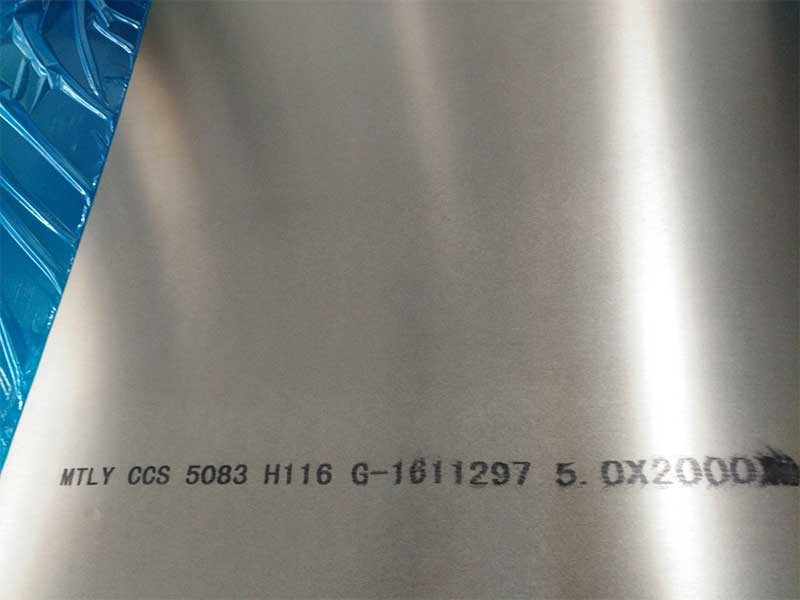
- 5083/5086 (higher Mg, when available): stronger and very corrosion-resistant, often used in demanding environments
For higher strength structural needs
- 6061 (Al-Mg-Si): higher strength and good machinability; selection depends on pattern feasibility and forming requirements
Tempering considerations
Temper affects how the sheet expands and how the final mesh behaves.
- O temper (annealed): maximum ductility, best for complex forming or deeper expansion without cracking
- H14/H24 (strain-hardened): a common balance; better strength than O, still workable
- H32/H34 (stabilized strain-hardened): popular for 5052; good corrosion resistance with improved strength
- T6 (solution heat-treated and artificially aged): strong but less formable; used when strength matters and expansion/forming limits are understood
If the project involves bending the expanded sheet into frames, cylinders, or architectural contours, discussing temper early prevents cracking and helps maintain pattern uniformity.
Chemical properties: what's inside common expandable-sheet alloys
Below is a typical composition overview (wt.%) for widely used aluminum alloys for expandable/expanded sheet. Actual limits vary by standard and supplier; always confirm with mill test certificates.
| Alloy | Si | Fe | Cu | Mn | Mg | Cr | Zn | Ti | Al |
|---|---|---|---|---|---|---|---|---|---|
| 1050 | ≤0.25 | ≤0.40 | ≤0.05 | ≤0.05 | ≤0.05 | - | ≤0.05 | ≤0.03 | ≥99.50 |
| 1060 | ≤0.25 | ≤0.35 | ≤0.05 | ≤0.03 | ≤0.03 | - | ≤0.05 | ≤0.03 | ≥99.60 |
| 3003 | ≤0.60 | ≤0.70 | 0.05–0.20 | 1.0–1.5 | ≤0.05 | - | ≤0.10 | ≤0.15 | Rem. |
| 5052 | ≤0.25 | ≤0.40 | ≤0.10 | ≤0.10 | 2.2–2.8 | 0.15–0.35 | ≤0.10 | ≤0.15 | Rem. |
| 6061 | 0.40–0.80 | ≤0.70 | 0.15–0.40 | ≤0.15 | 0.80–1.20 | 0.04–0.35 | ≤0.25 | ≤0.15 | Rem. |
Performance traits customers notice immediately
Ventilation and heat management are often the first wins. Expandable aluminum sheet enables airflow while maintaining a physical barrier, making it ideal for equipment guards and enclosures.
Slip resistance is another practical advantage. Raised expanded patterns create directional grip underfoot, frequently used on stairs, platforms, and service walkways.
Corrosion resistance is a major reason aluminum is chosen over steel for expanded products. With the right alloy (notably 5052) and proper finishing, it performs well outdoors and near saltwater.
Weight savings can be substantial. Open area reduces mass without forcing you into ultra-thin sheet, so you keep a sturdy feel while lowering load on frames and supports.
Finishing and fabrication: the "last mile" that defines quality
Expandable aluminum sheet can be anodized, powder coated, or painted, but the pattern geometry matters. Raised expanded surfaces hold coatings differently than flat sheets; edges and strand junctions need consistent pretreatment. For outdoor architectural panels, powder coating on 5052 or 3003 is common, while anodizing is popular when a metallic, long-life finish is desired.
Cutting and framing should respect the pattern direction. Designers often align the LWD direction to support spans or visual lines. If a clean border is required, specify banding, framing, or perimeter trimming so the panel edges look intentional and are safe to handle.
The takeaway: buying geometry, not just thickness
https://www.aluminumplate.net/a/expandable-aluminum-sheet.html