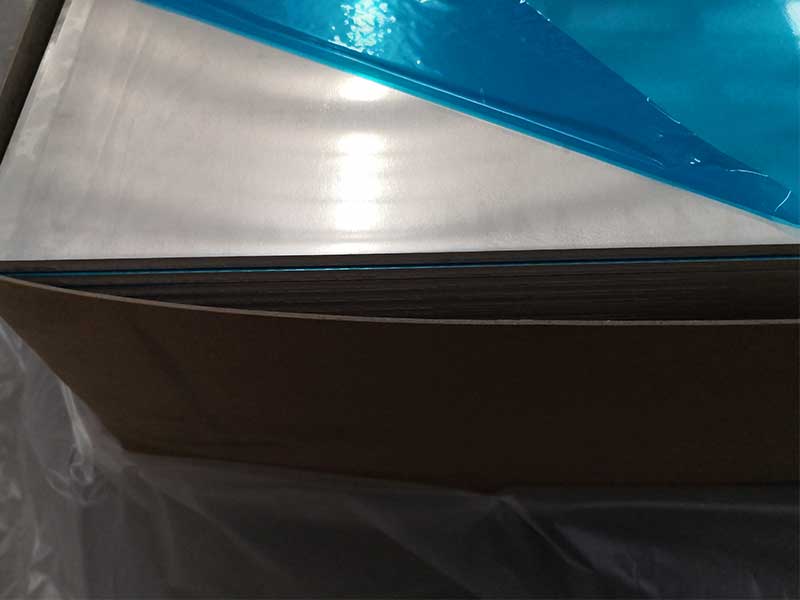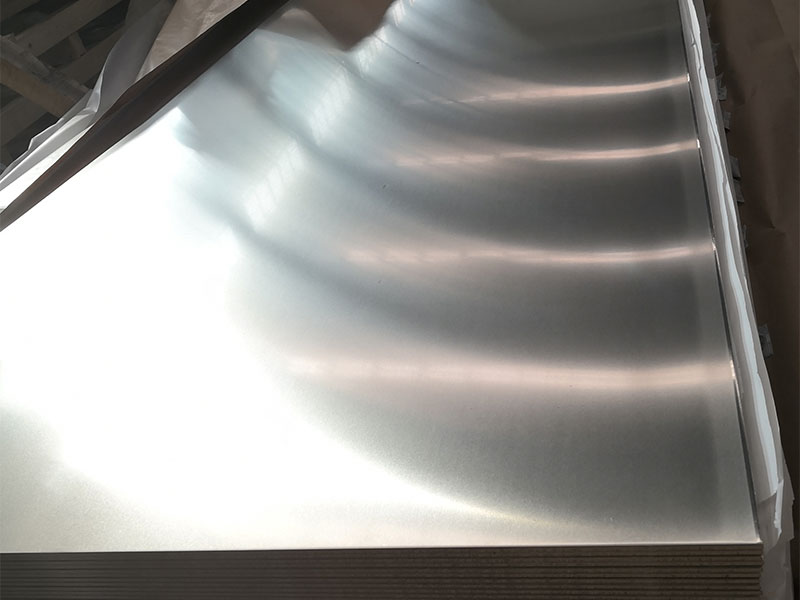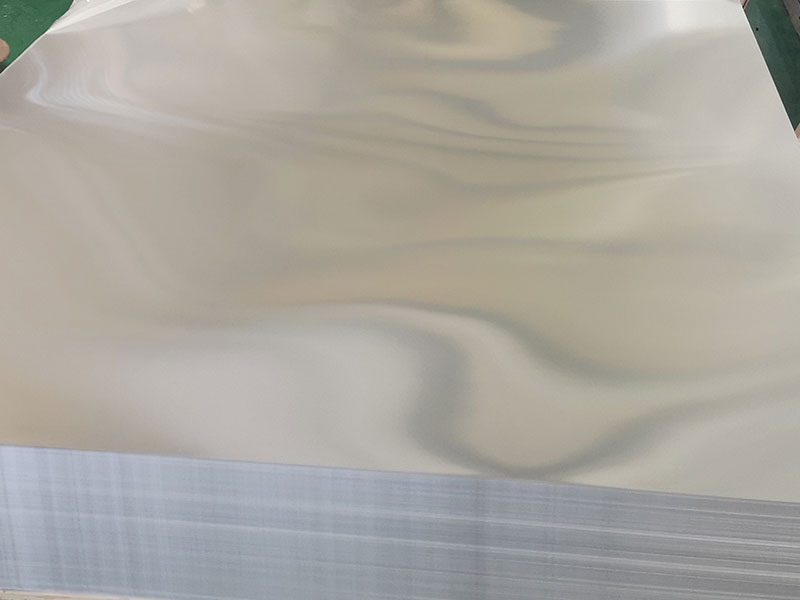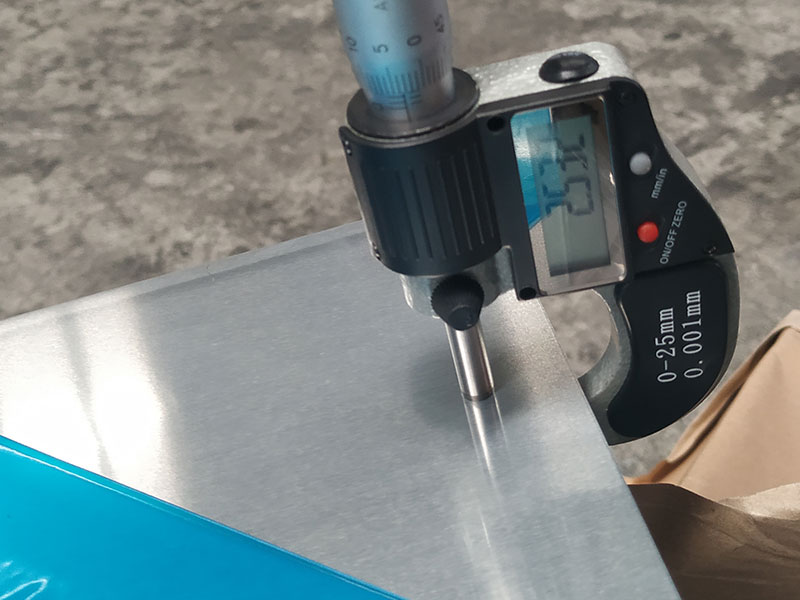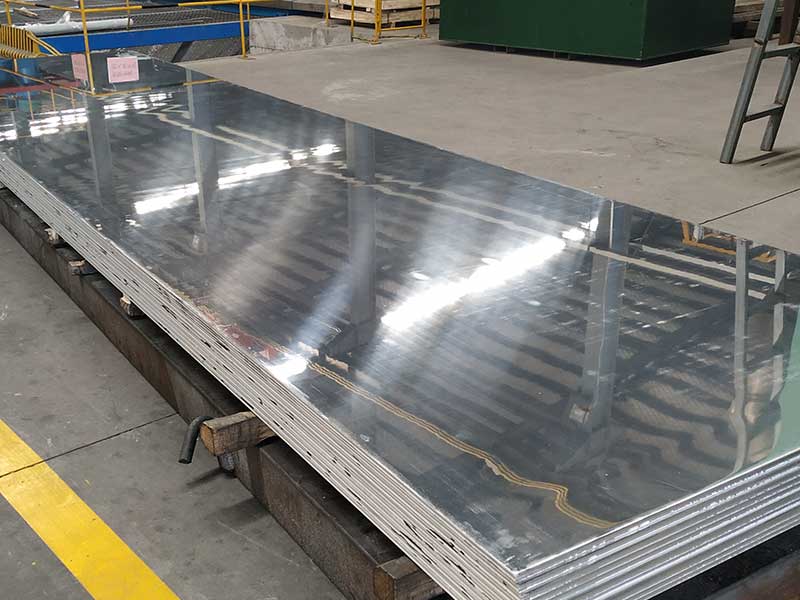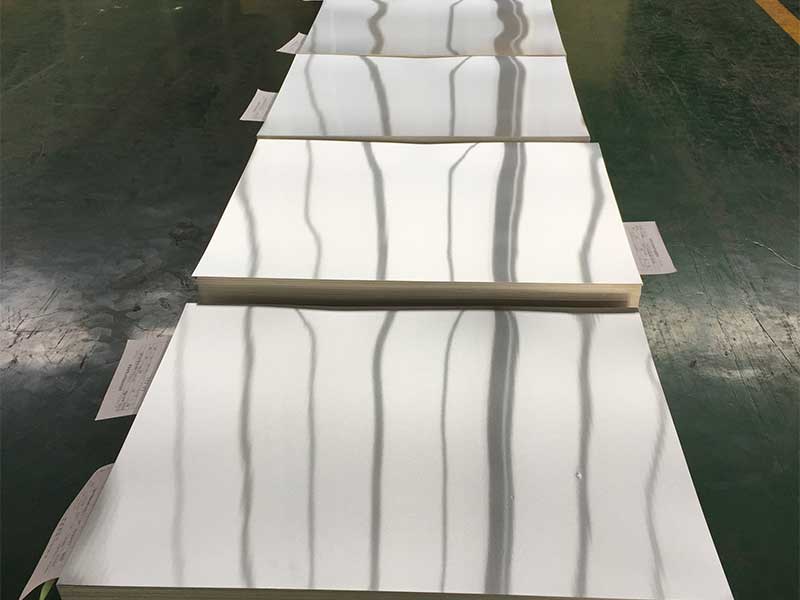

1050 aluminium sheet
1050 Aluminium Sheet: Pure Metal, Precise Performance
1050 aluminium sheet looks simple on the surface, but its value lies in what it does not have as much as what it does have. With a purity of about 99.5 percent aluminium and very low alloying elements, 1050 belongs to the 1xxx series, often called commercially pure aluminium. That purity gives it a distinct role in manufacturing: it is not the strongest alloy, but it is exceptionally clean, conductive, formable, and consistent.
Instead of treating 1050 sheet as just another item in a catalog, it helps to see it as a functional platform: a material that transfers heat, electricity, and forming loads with minimal resistance, while staying stable under a wide range of processing conditions.
functional advantages of 1050 aluminium sheet
High ductility and formability
Because 1050 has no heavy alloying additions like magnesium, silicon, or copper in large amounts, its aluminum matrix is soft and very uniform. That structure allows deep drawing, spinning, bending, and roll forming without cracking when the correct temper is selected. For manufacturers of shells, covers, reflectors, and stamped parts, 1050 behaves predictably across batches, which reduces tool wear and rejects.
Excellent thermal and electrical conductivity
1050 maintains one of the highest conductivity levels among aluminium sheet grades. This is crucial for:
- Heat dissipation in HVAC fins, evaporator plates, and heat shields
- Electrical grounding and bus components where current must travel with low loss
- Thermal interfaces in appliances and low temperature equipment
In design terms, the combination of low density and high conductivity means you can move heat and current with less metal mass, which supports lightweight systems.
Outstanding corrosion resistance
The nearly pure aluminium in 1050 quickly forms a stable oxide film in air. This passive layer protects against many common atmospheric and mildly corrosive environments. For indoor equipment housings, food contact surfaces, and ventilation components, this means long service life without heavy coatings or complex maintenance.
Non toxic and compliant with food and pharma needs
1050 is widely used where cleanliness matters. It is free from significant levels of toxic alloying elements. With proper finishing and compliance to relevant food contact regulations, it is suitable for kitchenware, food processing trays, and pharmaceutical equipment components. Its smooth surface is easy to clean, and it does not impart taste or odor when correctly processed.
Typical applications: seeing 1050 by its function
Heat management components
In refrigeration units, air conditioners, and dehumidifiers, 1050 sheet is often transformed into fins and plates that guide air and spread heat. The metal is thin, highly conductive, and easy to stamp with corrugations or patterns that increase surface area. In many systems, upgrading to high purity alloys like 1050 improves efficiency without changing the basic design.
Reflective and decorative surfaces
Polished or mirror finished 1050 sheet is used in lighting reflectors, lamp housings, signage back panels, and architectural trim. The alloy’s microstructure allows good polishing and anodizing behavior, achieving stable reflective surfaces. While other alloys can offer higher strength, they may sacrifice reflectivity. In 1050, the balance clearly favors optical performance.
Chemical and food industry equipment
Because 1050 sheet resists many neutral and slightly acidic solutions and responds well to cleaning regimes, it appears in:
- Food processing hoppers and covers
- Low stress chemical containers and linings
- Hygiene focused cladding in production rooms
Here, strength demands tend to be modest, but cleanliness, non staining surfaces, and corrosion resistance are critical.
Electrical and industrial conductors
For busbar style components where shape is more complex than a simple bar, 1050 sheet can be cut, bent, and laminated to create custom conductor assemblies. In grounding strips, shielding plates, and current distribution parts in switchgear, its conductivity and processability help keep both resistance and fabrication costs low.
General fabrication and protective panels
In mechanical engineering and general fabrication, 1050 sheet is selected for machine guards, enclosure panels, sign boards, and inner structural skins where high structural strength is not required. The material is easy to shear, laser cut, punch, and fold, while retaining adequate stiffness when properly supported or profiled.
Typical tempers and what they mean in practice
The performance of 1050 aluminium sheet is strongly influenced by its temper, that is, the way it has been processed after casting and rolling. The main tempers used in sheet are:
O temper
Fully annealed, soft condition. Maximum ductility and deep draw capability. Ideal for spinning, stretching, and complex stamped parts. Lower mechanical strength but excellent for cold forming without cracking.H14 temper
Strain hardened to a half hard condition. Provides a balanced combination of strength and formability. Often selected for panels, covers, and moderate forming operations like simple bends and shallow draws.H24 temper
Partially strain hardened and then lightly annealed. Offers slightly higher strength than H14 with controlled formability. Common for applications where the sheet must carry some load or resist denting but still accept bending and shaping.Other H tempers such as H18
Hard strain hardened state. Used where maximum strength and stiffness per thickness are needed and forming is minimal. Suitable for flat panels and strips that will not undergo deep post forming.
Choosing temper is essentially choosing how the sheet will cooperate with your process. If your priority is complex forming, O or soft H tempers are typically preferred. If your parts are mostly flat and must retain shape under modest load, half hard or harder tempers fit better.
physical and mechanical parameters
Typical property ranges for 1050 aluminium sheet in common tempers are:
- Density: about 2.71 g per cubic centimeter
- Electrical conductivity: approximately 55 to 60 percent IACS
- Thermal conductivity: roughly 220 W per meter Kelvin
- Melting range: about 646 to 657 degrees Celsius
Mechanical properties depend on temper and thickness, but typical values are:
- Tensile strength O temper: around 60 to 100 MPa
- Tensile strength H14 temper: around 100 to 145 MPa
- Elongation: up to about 35 percent in O temper, decreasing with higher temper hardness
For design, these values highlight that 1050 is not a structural alloy but excels in energy and mass transfer roles: moving heat, electricity, and forming stresses efficiently.
Implementation standards and typical specifications
1050 aluminium sheet is usually supplied according to widely recognized standards. Depending on region and application, common standards include:
- EN AW 1050A according to EN 573 for chemical composition and EN 485 for mechanical properties and tolerances
- Equivalent designations in other systems, such as A91050 under ASTM nomenclature
Sheets are available in a broad thickness range, for example:
- Thin sheet and coil from about 0.2 mm up to around 3.0 mm
- Medium plate thicknesses up to 6 mm or more on request
Width and length depend on mill capabilities and customer needs, typically:
- Coil widths commonly from around 600 mm up to 2000 mm
- Cut to length sheets as specified, commonly in the range of 1000 mm to 6000 mm lengths
Surface conditions can be mill finish, brushed, embossed, or polished, with additional options such as anodizing or coating for specific environments and visual requirements.
Chemical composition of 1050 aluminium sheet
The purity of 1050 is defined by strict composition limits. A typical chemical composition table is:
| Element | Content (percent) |
|---|---|
| Aluminium Al | about 99.5 minimum |
| Silicon Si | up to about 0.25 |
| Iron Fe | up to about 0.40 |
| Copper Cu | up to about 0.05 |
| Manganese Mn | up to about 0.05 |
| Magnesium Mg | up to about 0.05 |
| Zinc Zn | up to about 0.07 |
| Titanium Ti | up to about 0.05 |
| Other, each | up to about 0.03 |
| Other, total | up to about 0.15 |
The high aluminium minimum, combined with very low levels of other elements, explains the alloy’s strong conductivity and easy formability. At the same time, the controlled presence of small amounts of Si and Fe helps with castability and surface quality during rolling.
A distinctive way to think about 1050
While many alloys are defined by how much stress they can handle, 1050 is best understood by how smoothly it allows every kind of flow:
- Flow of metal during forming, thanks to its ductility
- Flow of heat through components, supporting efficient temperature control
- Flow of current in electrical paths, minimizing energy loss
This makes 1050 aluminium sheet a foundational material for systems where reliability and processing efficiency matter more than ultimate strength. When you need a sheet that shapes easily, carries heat and electricity effectively, resists everyday corrosion, and stays cost effective, 1050 provides a clean, predictable base for design and manufacturing.