
Aluminum sheet Cc 1050 1060 1100 3003
Aluminum sheet CC 1050 1060 1100 3003: four "everyday" alloys seen through a fabric-maker's eyes
If you stand in front of a rack of aluminum sheet, the labels can feel like a code: CC 1050, 1060, 1100, 3003. Many buyers treat them like interchangeable "basic aluminum." Yet these grades behave less like identical metals and more like different fabrics. Some drape beautifully and take a flawless finish; some hold a crease; some accept the rough-and-ready abuse of a workshop without complaint. Choosing well is not about chasing the highest strength or the lowest price-it's about matching the alloy's personality to the job's real life: forming, joining, surface, corrosion, and the way the sheet will be handled after it leaves the mill.
In practice, CC 1050, 1060, and 1100 sit in the commercially pure family, while 3003 belongs to the Al–Mn group. That one change-adding manganese-creates a noticeable shift in how the sheet works in the press, how it resists dents, and how it survives outdoors.
What "CC" and the alloy numbers really imply on the shop floor
"CC" is often used in some markets to refer to common commercial-grade aluminum sheet (frequently in coil form). In real purchasing, the important part is not the two letters but the standard you are buying to and the temper you specify. For sheet, that commonly means AA/EN designations and tempers such as O, H14, H24, H32, or H18. If you do not lock down the temper and standard, you may receive material that is technically "1050" but behaves differently in forming and flatness.
Typical governing standards used internationally include ASTM B209 (sheet and plate), EN 485 (sheet/strip in Europe), JIS H4000 (Japan), and GB/T 3880 (China). Your supplier's certificate should reference one of these (or an equivalent) plus the temper and dimensional tolerances.
The "pure" trio: 1050, 1060, 1100 as finish-first, form-friendly metals
1050 and 1060 are high-purity aluminum grades. They are chosen when you want excellent corrosion resistance, very good electrical and thermal conductivity, easy forming, and a surface that can be finished attractively. They are not chosen when the part must carry high loads or resist heavy denting.
1100 is also commercially pure, but with slightly different impurity allowances (notably copper in small amounts). In everyday fabrication, 1100 often feels like a practical middle ground: still very formable, still corrosion resistant, still friendly for finishing, with a bit of "real-world robustness" in availability and processing.
Where these grades shine is in parts that behave like skin rather than skeleton: trim, panels, reflectors, cookware, light-duty enclosures, nameplates, insulation jacketing, and architectural details that need to look clean and stay clean.
3003: the sheet that forgives abuse
3003 adds manganese, which increases strength and improves resistance to some forms of wear while keeping very good formability. In many workshops, 3003 becomes the default "workhorse sheet" because it tolerates handling, bending, and minor impacts better than the purer grades, without jumping to the higher cost and more specialized forming behavior of heat-treatable alloys.
If you are making HVAC fins, roofing accessories, general sheet-metal fabrications, pans, ducts, trailers' non-structural panels, or stamped housings, 3003 is frequently the calm, dependable choice-especially in H14/H24 tempers where it has useful stiffness while still bending well.
Temper: the silent decision that controls cracking, flatness, and dents
For these non-heat-treatable alloys, strength is mainly controlled by cold work. That is what the "H" tempers represent.
O temper is annealed and soft. It forms beautifully, resists cracking in deep drawing, and is forgiving in complex shapes. It also dents easily and can show handling marks.
H14 is strain-hardened to about half-hard. It is stiffer, stronger, and more dent-resistant, but tighter radii and aggressive forming can crack, especially across the rolling direction.
H24 is strain-hardened and partially annealed. Many buyers like it because it balances formability and strength-less springback and less cracking sensitivity than H14, with better rigidity than O.
H18 is full-hard and is used when forming is minimal and you mainly need stiffness.
If a project is failing in production, the culprit is often not the alloy number but an overly hard temper specified "for strength" that later cracks at flanges, hems, or draw beads.
Chemical composition snapshot
Actual limits depend on the standard, but the ranges below reflect typical AA expectations and are useful for comparison.
| Alloy | Si (max) | Fe (max) | Cu | Mn | Mg | Zn (max) | Ti (max) | Al (min) / remainder |
|---|---|---|---|---|---|---|---|---|
| 1050 | 0.25 | 0.40 | 0.05 | 0.05 | 0.05 | 0.05 | 0.03 | ≥ 99.50 |
| 1060 | 0.25 | 0.35 | 0.05 | 0.03 | 0.03 | 0.05 | 0.03 | ≥ 99.60 |
| 1100 | 1.00 (Si+Fe) | - | 0.05–0.20 | 0.05 | - | 0.10 | - | ≥ 99.00 |
| 3003 | 0.60 | 0.70 | 0.05–0.20 | 1.0–1.5 | - | 0.10 | 0.10 | remainder |
This table also hints at why 3003 feels tougher: manganese is doing real work. The "pure" grades have little alloying to resist deformation beyond what cold work provides.
Mechanical properties: what you can expect, not what you should overpromise
Mechanical properties vary with thickness and temper. The approximate ranges below are widely used for preliminary selection.
| Alloy / Temper | Typical tensile strength (MPa) | Typical yield strength (MPa) | Typical elongation (%) |
|---|---|---|---|
| 1050-O | 60–95 | 20–35 | 25–40 |
| 1050-H14 | 95–125 | 75–105 | 4–12 |
| 1060-O | 65–100 | 20–35 | 25–40 |
| 1100-O | 70–110 | 25–40 | 25–45 |
| 1100-H14 | 105–140 | 85–120 | 4–12 |
| 3003-O | 90–130 | 35–55 | 20–35 |
| 3003-H14 | 140–180 | 110–150 | 3–10 |
| 3003-H24 | 150–190 | 115–160 | 5–12 |
If your part needs "real strength," these alloys may not be the right place to search. Their value is manufacturability and corrosion performance per dollar, not structural load bearing.
Processing reality: forming, joining, and finishing
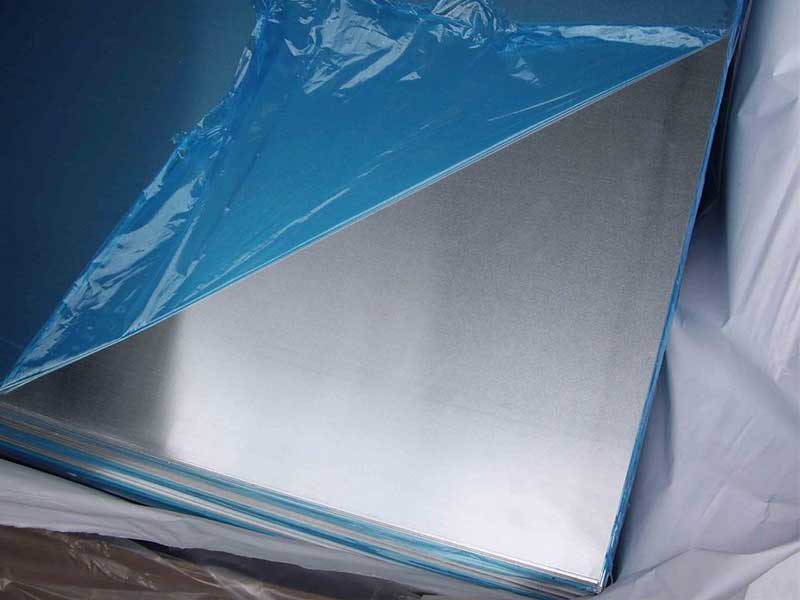
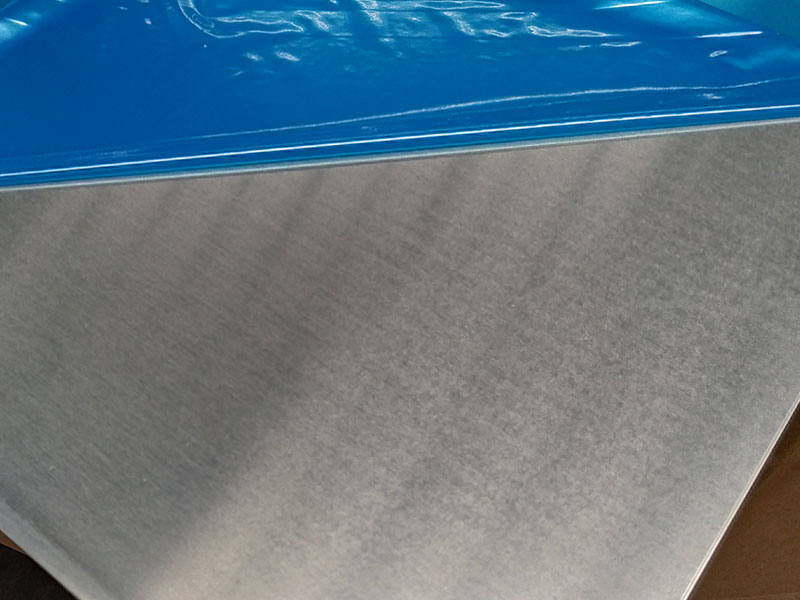
In forming, the pure grades are the artists. They deep-draw smoothly and tolerate complex curvature, especially in O temper. If you want crisp cosmetic surfaces, 1050/1060/1100 can be excellent, but they also show every scratch, so protective films and careful handling matter.
3003 is the pragmatic builder. It stamps well, bends well, and survives daily shop handling with fewer cosmetic tragedies. For tight bend radii, choose softer tempers or test bend across and along the rolling direction; grain direction still matters.
For welding, all four are generally weldable. In practice, filler selection and technique depend on the service environment and required appearance. Many fabricators use common fillers such as ER4043 or ER5356 depending on corrosion and strength needs, and they validate with a weld procedure test rather than relying on habit.
For brazing and finstock applications, the base alloy choice is often paired with cladding or specific tempers designed for heat exchange manufacturing, so clarify whether you are buying plain sheet, brazing sheet, or finstock.
For anodizing and surface finishing, purer alloys typically anodize with a bright, clean appearance. 3003 can anodize well but may show a slightly different tone due to alloying content; if color matching across parts matters, run sample panels first.
How to choose when the drawing doesn't tell the whole story
If the part is decorative, reflective, or highly formed, 1050/1060/1100 in O or H24 often behaves like a premium "skin material." If the part is a general-purpose fabrication where dents, stiffness, and routine forming are the daily reality, 3003 in H14/H24 is often the quiet winner.
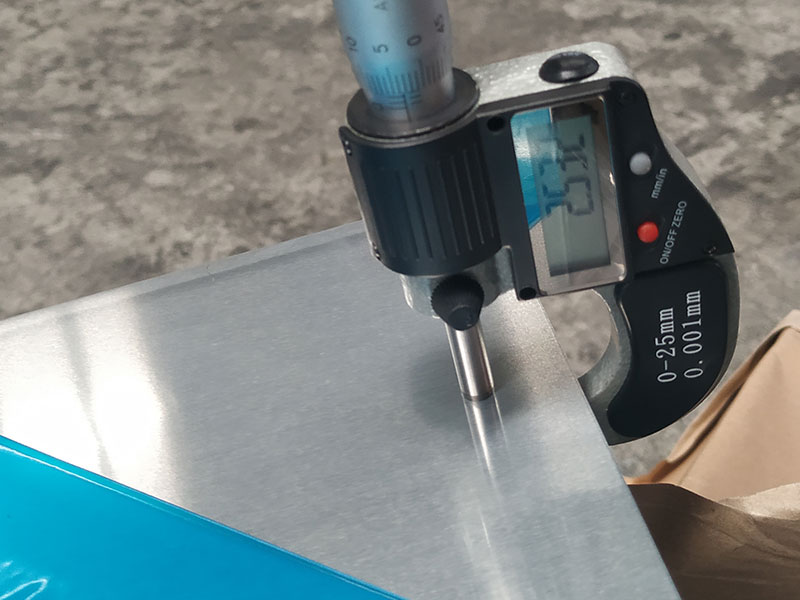
The best procurement practice is to specify more than the alloy: include standard, temper, thickness tolerance, flatness expectations, surface condition, protective film requirements, and whether you accept mill finish, brushed, or coated surface. That is how you turn "CC 1050 1060 1100 3003" from a label into a predictable manufacturing input.
In the end, these alloys are popular not because they are ordinary, but because they are honest. They tell you exactly what they are: sheet metals that reward sensible temper selection, careful surface handling, and standards-driven purchasing. Treat them like fabrics, not just metals, and you will choose faster, scrap less, and ship parts that look and perform the way you intended.
https://www.aluminumplate.net/a/aluminum-sheet-cc-1050-1060-1100-3003.html