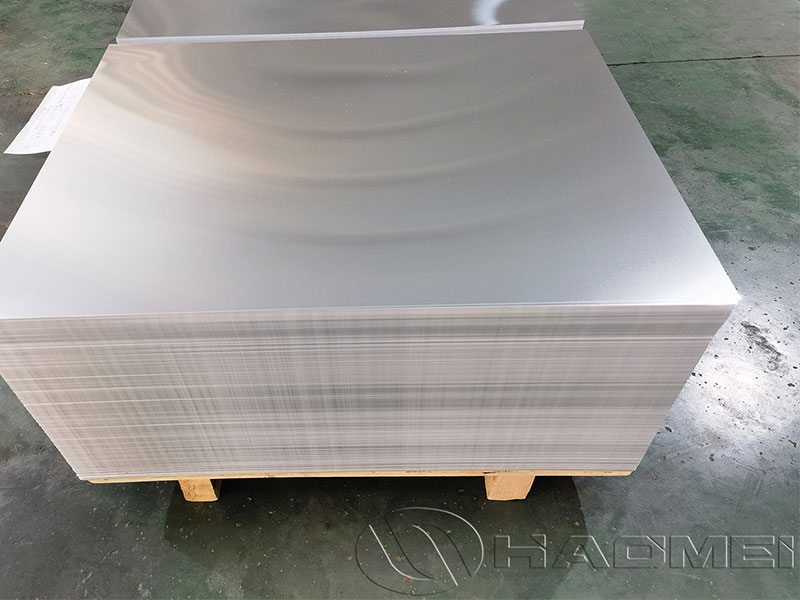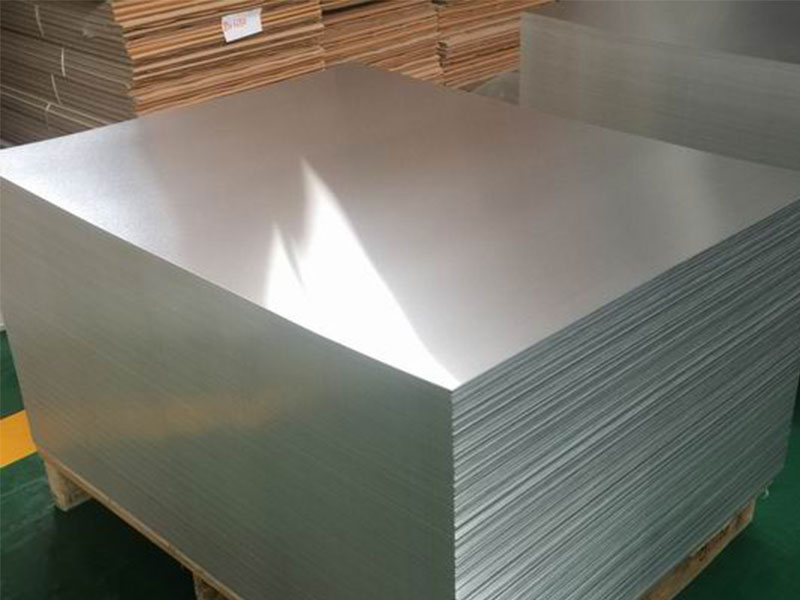

Pvc end cap for aluminium sheet
When people talk about aluminium sheets, they usually focus on alloy grades, temper, thickness tolerance, flatness, coating systems, or surface finish. Those are the visible factors, the ones that make it into drawings, contracts, and production meetings. Yet in real manufacturing and logistics, a much smaller detail often decides whether a sheet arrives in usable condition or becomes a source of edge damage, customer complaints, and hidden cost. That detail is the PVC end cap.
From a distance, a PVC end cap looks unremarkable. It is simply a protective piece fitted over exposed edges or corners during storage, handling, and transport. But from a practical perspective, it acts like a silent insurance policy for aluminium sheet. It protects the product at the exact point where aluminium is most vulnerable: the edge, where impact, abrasion, and local stress are concentrated.
This is especially important because aluminium sheet combines attractive properties with a certain sensitivity. Aluminium is light, formable, corrosion-resistant, and easy to process, but many common sheet alloys can still be scratched, dented, or deformed at their edges during packaging and movement. A PVC cap helps reduce this risk without adding much weight or complexity.
Why the Edge Matters More Than People Expect
A flat aluminium sheet may seem robust, but the edge tells a different story. The edge is where stacking pressure transfers unevenly, where forklifts accidentally touch, where straps can bite, and where operators often grip the material. For coated or anodized sheets, edge protection is even more significant because a damaged edge can compromise appearance and downstream performance.
In architectural, transportation, appliance, and industrial applications, edge quality influences more than cosmetics. Sharp or burred edges can create safety hazards. Minor edge dents can interfere with bending, joining, or automated feeding. In precision fabrication, even a small defect may cause rejection before the sheet ever reaches the forming stage.
That is why PVC end caps are not just packaging accessories. They are process protection tools.
Why PVC Is Commonly Used
Polyvinyl chloride, or PVC, remains a popular material for end caps because it offers a practical balance of flexibility, toughness, chemical resistance, and cost control. A well-designed PVC cap can grip the aluminium edge securely while still being easy to install and remove. It absorbs shock better than a rigid protector and conforms to slight dimensional variation in the sheet stack.
In industrial packaging, the desired PVC properties typically include:
| Property | Typical Range/Feature | Practical Benefit |
|---|---|---|
| Hardness | Shore A 70–95 | Balances flexibility and grip |
| Service temperature | -10°C to 60°C, depending on formulation | Suitable for most storage and transport environments |
| Density | 1.20–1.45 g/cm³ | Stable material with predictable performance |
| Tensile strength | 10–25 MPa | Helps resist tearing during handling |
| Elongation at break | 150–300% | Allows fit over edges without cracking |
| Chemical resistance | Good against water, oils, many mild chemicals | Useful in warehouse and workshop conditions |
| Color options | Black, clear, blue, custom | Supports identification or aesthetic needs |
The actual PVC formulation matters. Soft PVC is usually preferred for edge caps because it reduces installation force and improves impact absorption. If the cap is too hard, it may mark delicate surfaces or fail to seat properly. If it is too soft, it may slip off in transit.
The Relationship Between PVC End Caps and Aluminium Alloy Selection
The need for end-cap protection changes depending on the aluminium alloy, temper, and final use. Softer alloys and tempers are often more susceptible to edge deformation during handling, while harder tempers may resist denting better but can still suffer coating damage or local chipping at corners.
Below is a practical reference for common aluminium sheet alloys:
| Alloy | Typical Temper | Main Characteristics | Common Uses | Relative Need for Edge Protection |
|---|---|---|---|---|
| 1050 | O, H14 | High purity, excellent formability, soft | Reflectors, chemical equipment, general sheet | High, due to softness |
| 1060 | O, H24 | Good corrosion resistance, very workable | Signs, insulation, decorative sheet | High |
| 3003 | H14, H24 | Good formability, moderate strength | Roofing, cladding, utensils | High to medium |
| 3105 | H14, H24 | Good corrosion resistance, paintability | Building panels, gutters | Medium to high |
| 5052 | H32, H34 | Good strength, marine corrosion resistance | Vehicle panels, tanks, cabinets | Medium |
| 5083 | O, H111, H321 | High strength, excellent marine performance | Shipbuilding, pressure applications | Medium |
| 5754 | H22, H24 | Good weldability, medium strength | Automotive, floor panels | Medium |
| 6061 | T4, T6 | Structural strength, machinability | Transport, frames, industrial plate | Medium |
| 8011 | H14, H18 | Good workability, packaging performance | Caps, household foil stock, sheet applications | Medium |
For coated aluminium sheet, such as PE or PVDF painted sheet used in architecture, PVC end caps are particularly helpful because they reduce the chance of edge chipping and coating abrasion. For anodized sheet, they can help preserve the integrity of the decorative surface during movement between fabrication stages.
Relevant Standards and Practical Quality Considerations
PVC end caps themselves are often customized packaging items, so they may not always be governed by a single universal product standard. However, their use should align with the quality expectations applied to aluminium sheets under recognized material standards.
For aluminium sheet, commonly referenced implementation standards include:
| Standard | Scope |
|---|---|
| ASTM B209 | Aluminium and aluminium-alloy sheet and plate |
| EN 485 | Aluminium and aluminium alloys, sheet, strip and plate |
| GB/T 3880 | Wrought aluminium and aluminium alloy plates, sheets and strips |
| JIS H4000 series | Aluminium and aluminium alloy sheets, strips and plates |
In practice, the PVC cap should be selected based on sheet thickness, edge geometry, stack height, transport method, and storage duration. A cap that works for a 0.8 mm painted sheet may not be suitable for a 5 mm 5052-H32 industrial sheet. The fit must be firm but not aggressive. If the cap is too tight, operators may force installation and scratch the edge. If it is too loose, it may detach before the material reaches the customer.
A good supplier will usually confirm several parameters before producing the cap:
| Parameter | Typical Requirement |
|---|---|
| Aluminium sheet thickness | Matched to cap slot width |
| Edge condition | Sheared, slit, deburred, rounded |
| Surface finish | Mill finish, anodized, coated, laminated |
| Sheet dimensions | Determines corner and edge protection strategy |
| Packaging type | Palletized, crated, strapped, racked |
| Shipping environment | Domestic, export, humid, cold-chain, long-distance |
| Reuse requirement | Single-use or returnable packaging |
Chemical Compatibility and Surface Safety
One concern sometimes raised is whether PVC may react negatively with aluminium. Under ordinary storage and transportation conditions, properly formulated PVC end caps are generally compatible with aluminium sheet. Problems usually arise not from the PVC polymer itself, but from poor-quality plasticizers, contamination, excessive pressure, prolonged heat exposure, or trapped moisture.
That means the cap should not be treated as a universal solution independent of packaging discipline. The aluminium surface should be clean and dry before packing. If sheets are stored in hot conditions for long periods, especially when tightly wrapped, it is wise to test the cap material against the finished surface. This is particularly relevant for decorative, coated, mirror-finish, or anodized products where even slight marking is unacceptable.
For export packaging, the cap works best when combined with sound protective practices such as interleaving paper, PE film, desiccants where needed, and mechanically stable pallet design.
A Different Way to Think About It
The most interesting thing about a PVC end cap is that it shifts our attention from material production to material survival. Aluminium sheet is not judged only by how well it is rolled, annealed, leveled, coated, or cut. It is judged by the condition in which it finally enters the customer's machine, press brake, or assembly line.
In that sense, the PVC end cap belongs to the emotional side of industrial quality. It tells the customer that someone anticipated risk. Someone respected the last meter of the journey, not just the first hundred meters of manufacturing. That may sound poetic for a plastic accessory, but in business terms it is practical. Reduced edge damage means fewer claims, less rework, safer handling, cleaner processing, and more consistent product image.
For aluminium sheet suppliers, this small protector can improve customer trust disproportionate to its cost. For fabricators, it can reduce scrap and improve workflow. For end users, it often means receiving material that is ready to use rather than ready to argue about.
Final Thoughts
PVC end caps for aluminium sheet are a modest solution to a very real problem. They protect the most exposed part of the sheet, help preserve edge quality and surface appearance, and support safer, cleaner logistics. Their value becomes even clearer when dealing with softer alloys, coated surfaces, export shipments, or customer environments where presentation matters as much as performance.
In aluminium, quality is often discussed in microns, megapascals, and temper codes. But sometimes quality is simply the absence of a damaged edge. That is where the PVC end cap does its quiet work-small in size, but deeply connected to the real-life success of aluminium sheet.
https://www.aluminumplate.net/a/pvc-end-cap-for-aluminium-sheet.html