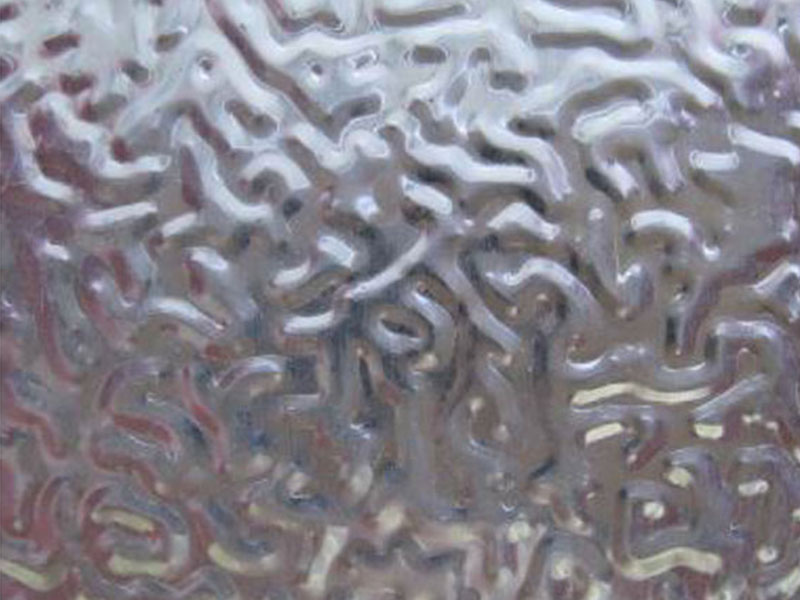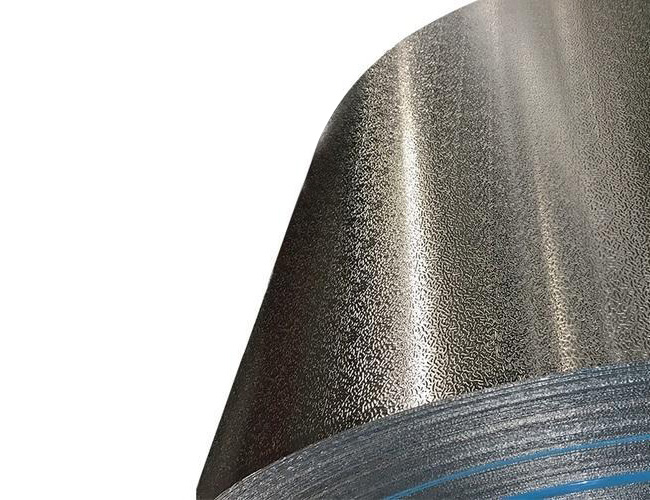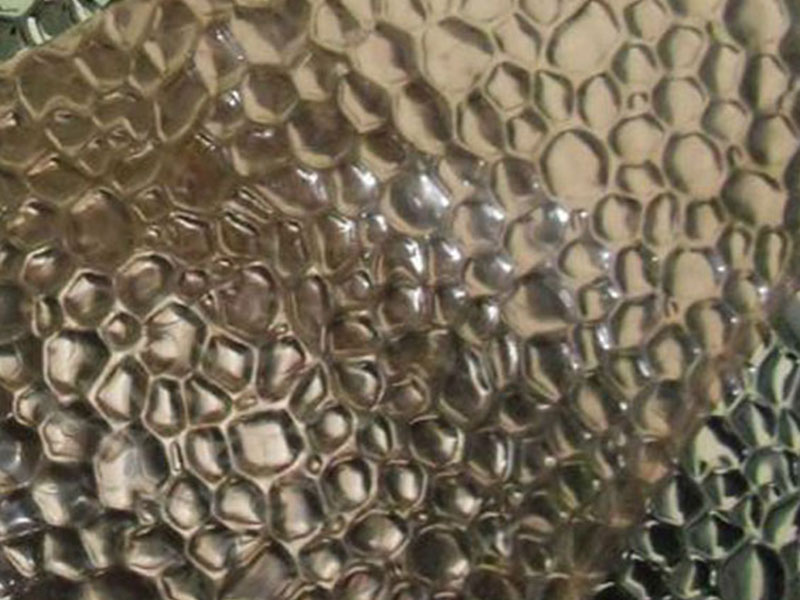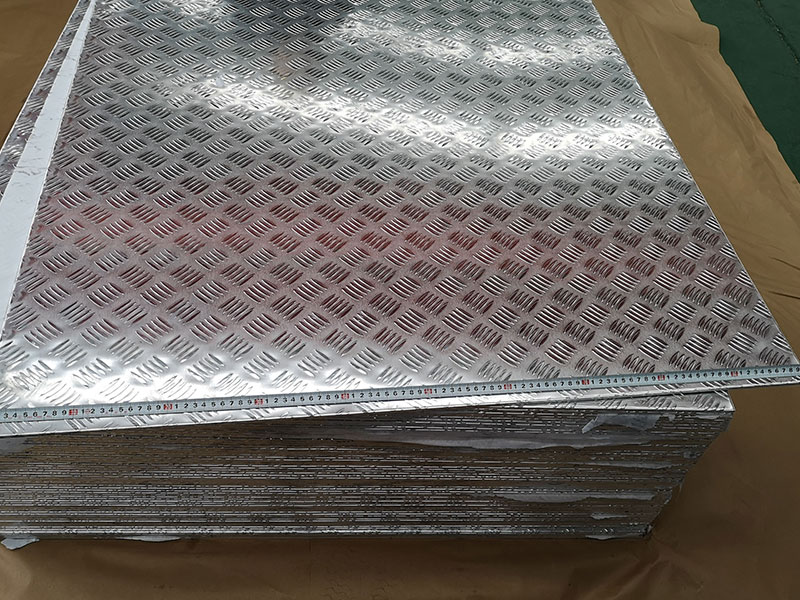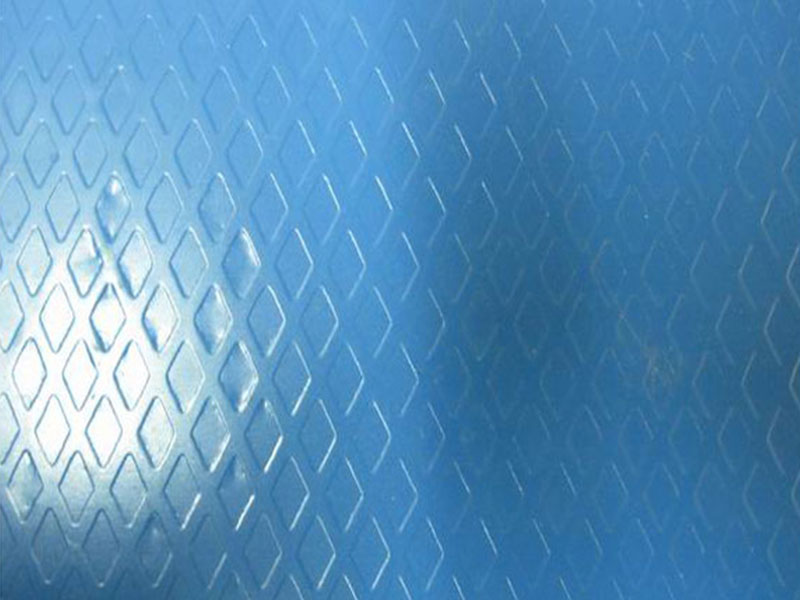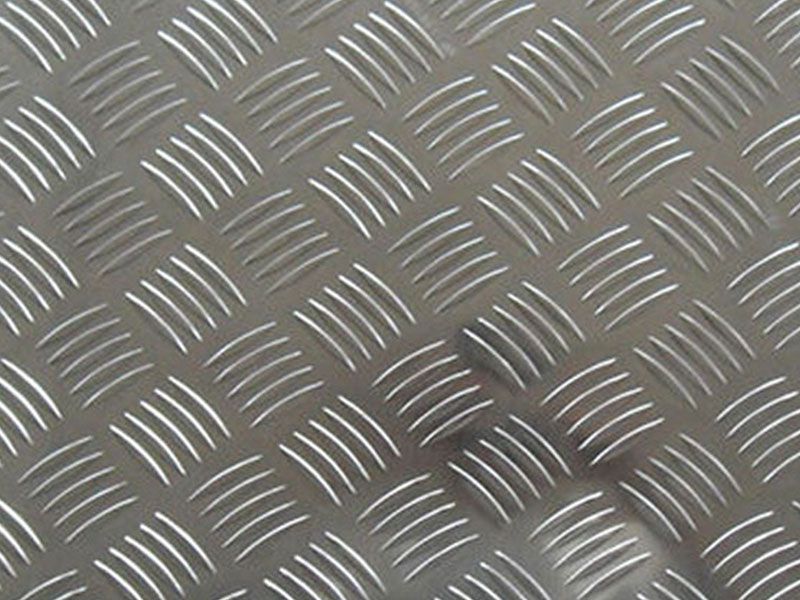

Aluminum tread plate Mill Finish 0.4mm Thickness 4x8" 1050
There's a particular honesty to a thin sheet of aluminum tread plate. At 0.4mm, it doesn't pretend to be a heavy-duty truck bed or a forklift ramp. Instead, it lives in the world of practical surfaces: lightweight skins, protective liners, decorative-industrial panels, and the kind of "cover and shield" applications where you want the look and bite of a tread pattern without the mass. When the alloy is 1050 and the surface is mill finish, that honesty becomes even clearer: this is aluminum in a near-pure, workmanlike form, ready to be cut, bent, bonded, riveted, or laminated into something that needs to last quietly.
A 4x8" format (commonly supplied as 4x8 ft sheets in many markets) is the familiar carpenter's canvas translated into metalwork. It fits shop tables, standard racks, and typical CNC nesting strategies. It reduces waste for common cabinet-like enclosures, access panels, cladding, and light-duty flooring overlays. In other words, it's a size that speaks the language of fabrication workflows rather than abstract metallurgy.
Seeing 1050 tread plate for what it is
Aluminum 1050 sits in the 1xxx family, meaning very high aluminum content. That purity buys you corrosion resistance and excellent formability. It also means you should not expect high structural strength. With 0.4mm thickness, strength is not the story anyway; stability, corrosion behavior, and workability are.
In a tread plate, the raised pattern contributes local stiffness and improves grip, but on a 0.4mm base it's best understood as a functional texture rather than a load-bearing geometry. Many customers choose this thin tread plate when they want a surface that resists scuffing, hides minor scratches, and offers a "technical" aesthetic-like the visual shorthand of safety and durability-while keeping weight low.
Mill finish: not a flaw, a baseline
Mill finish is the natural finish straight from rolling, typically with a matte-to-satin appearance and some variation in tone. It's not polished, it's not anodized, and it's not pre-painted. That matters because mill finish is both flexible and honest:
- It's easier to fabricate without worrying about scratching a decorative coating.
- It's an excellent substrate for later finishing such as anodizing, powder coating, or lamination.
- It will show fingerprints and shop handling marks more readily than coated sheet, which is often acceptable in industrial contexts.
For 1050 in mill finish, the surface oxide layer forms quickly and provides good corrosion resistance in many environments. In coastal or chemically aggressive settings, additional finishing or isolation from dissimilar metals becomes more important.
Thickness 0.4mm: where design becomes handling
At 0.4mm, material behavior is dominated by handling, flatness, and edge quality rather than brute strength. This thickness is easy to shear, guillotine, or laser-cut (with proper parameters), and it bends readily on light press brakes. But it can also oil-can, dent, or ripple if you treat it like thicker plate.
If you're specifying 0.4mm aluminum tread plate, the most practical mindset is to design it as a skin supported by a substrate. Bond it to plywood, composite board, honeycomb panel, or a frame. Use it as a protective wrap, not as a spanning element.
Common uses at this thickness include appliance surrounds, trailer interior liners, tool box wraps, decorative wall panels, kick plates, threshold covers, and anti-scuff surfaces. In these applications, the pattern does two quiet jobs: it reduces visible wear and increases friction compared with flat sheet.
Typical temper and property expectations
1050 is often supplied in tempers such as O (annealed) for maximum formability, H14/H24 for moderate strength and good formability, or H18 for higher hardness. For thin tread plate that may be bent, wrapped, or formed around corners, H14 or O are common choices depending on the forming severity and the required stiffness.
For reference-level planning, these are typical property ranges for 1050 sheet (values vary by temper, thickness, and standard):
- Density: about 2.71 g/cm³
- Thermal conductivity: roughly 220–230 W/m·K
- Electrical conductivity: typically high (often around 60% IACS or more, temper dependent)
- Melting range: approximately 646–657°C
- Tensile strength: broadly from about 60 MPa (O) up to around 120 MPa (hard tempers)
- Yield strength: broadly from about 20 MPa (O) up to around 100 MPa (hard tempers)
- Elongation: high in O temper, reduced in harder tempers
These numbers aren't meant to replace a mill test certificate; they help set expectations so the sheet is used where it performs best.
Chemical composition: what "near-pure" looks like
1050 is valued because impurities are tightly limited. Different standards phrase limits slightly differently, but the following table reflects common composition expectations used across industry for Aluminum 1050/1050A-type material.
| Element | Typical limit (wt.%) |
|---|---|
| Al | ≥ 99.50 |
| Si | ≤ 0.25 |
| Fe | ≤ 0.40 |
| Cu | ≤ 0.05 |
| Mn | ≤ 0.05 |
| Mg | ≤ 0.05 |
| Zn | ≤ 0.05 |
| Ti | ≤ 0.03 |
| Others (each) | ≤ 0.03 |
| Others (total) | ≤ 0.10 |
If your application involves anodizing appearance, asking for tighter Fe/Si control and consistent rolling practice can improve visual uniformity, because trace elements and surface history influence how anodic films look.
Implementation standards and what to confirm on a purchase order
A thin tread plate is only "simple" until it arrives and doesn't fit your process. Practical procurement is about naming the right standard and a few inspection points.
Commonly referenced standards include EN 573 (chemical composition), EN 485 (mechanical properties and tolerances for sheet/strip), ASTM B209 (aluminum sheet and plate), and ASTM B632/B632M (tread plate, where applicable). Depending on region, GB/T or JIS equivalents may be used.
When ordering "aluminum tread plate Mill Finish 0.4mm 4x8 1050," the details that prevent surprises are:
- Alloy designation and temper, explicitly stated (for example 1050-H14 or 1050-O)
- Thickness tolerance expectation at 0.4mm, which is more sensitive than thicker gauges
- Pattern type and orientation, because different mills use different diamond geometries and pitch
- Flatness expectations and permissible waviness, especially if you plan to laminate it
- Protective film requirement, if the surface must remain clean for bonding or visual use
- Edge condition and burr limits, important for safe handling and for tight-fit assemblies
Fabrication notes from the shop floor
Cutting 0.4mm tread plate is generally easy, but the raised pattern can influence tool contact. Sharp blades and proper clamping reduce chatter. For laser cutting, thin aluminum's reflectivity and heat conduction demand tuned parameters and good fixturing to avoid lift and vibration.
Bending is straightforward in suitable tempers, but the tread pattern can emboss into softer substrates if pressed. If you're bonding to wood or composite, consider a uniform adhesive layer and pressure distribution during cure so the pattern doesn't telegraph undesirably.
Joining invites another practical truth: 1050 is very weldable, but at 0.4mm, welding becomes a finesse operation. Spot welding or TIG/MIG can be done with careful control, yet many projects prefer adhesive bonding, riveting, or clinching to preserve flatness and minimize distortion.
Corrosion performance is generally excellent, but galvanic corrosion can occur when aluminum contacts stainless steel, copper, or carbon steel in the presence of moisture. Isolation washers, barrier tapes, or coatings are inexpensive insurance.
A thin, patterned sheet with a clear mission
In a world that often equates "tread plate" with "thick and rugged," a 0.4mm mill finish 1050 tread plate is a reminder that function can be quiet. It's not trying to carry the load; it's trying to protect what carries the load. It offers a grippy, industrial surface vocabulary in a form that's easy to handle, easy to shape, and forgiving in corrosive atmospheres.
https://www.aluminumplate.net/a/aluminum-tread-plate-mill-finish-04mm-thickness-4x8-1050.html