
Gold Color Coated Aluminum Sheet
Gold Color Coated Aluminum Sheet
Gold is usually treated as a promise: permanence, prestige, the warm certainty of something that won't fade. Aluminum, on the other hand, is often chosen for practical reasons: it is light, workable, corrosion resistant, and honest about being a modern material. Put them together in a gold color coated aluminum sheet, and you get a fascinating compromise-an engineered surface that delivers the emotional signal of gold while relying on the structural logic of aluminum.
From a materials perspective, that blend is not imitation; it's translation. The "gold" is a carefully tuned optical effect created by pigments, resins, and controlled film thickness. The "sheet" is an aluminum alloy designed to take forming, hold paint, and survive outdoor chemistry. When a customer asks for gold, they often want a feeling-luxury, warmth, visibility, celebration. When an engineer specifies aluminum, they want a performance envelope. Color coated gold aluminum is where those two languages meet.
What "Gold" Really Means on a Coil Line
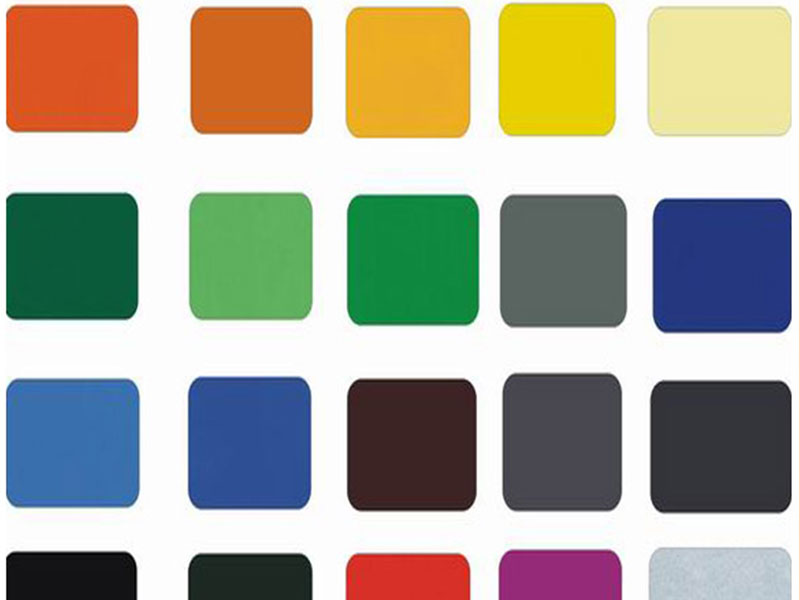
A gold finish can look regal, champagne, antique, bright, or brushed-yet all of these are made from the same fundamentals: light interacting with a polymer film containing pigments and, sometimes, metallic flakes or mica. Small differences in pigment type and distribution can shift the perceived hue from yellow-gold to rose-gold to bronze-gold. Gloss level also matters: a high-gloss gold reads like jewelry; a matte gold reads like architecture.
In practice, the finish is typically applied by coil coating (continuous roll coating) or sheet coating (batch coating). Coil coating tends to deliver better uniformity, tighter film thickness control, and consistent curing-critical for gold shades because human eyes notice slight variations in metallic appearance. If your project involves large façade areas or long lengths of cladding, coil-coated stock is usually the safer route for color consistency.
Common coating systems include:
- PE (Polyester): economical, good for interior decoration and mild exterior environments.
- SMP (Silicone-modified polyester): improved chalking resistance and hardness compared with standard PE.
- PVDF (Polyvinylidene fluoride, often 70/30 PVDF resin systems): strong UV stability and long-term color retention for demanding exteriors.
- PU (Polyurethane): often chosen for toughness and abrasion resistance, depending on formulation.
Gold colors can be achieved in all these systems, but not all golds age the same. Some shades are more stable against UV and atmospheric pollutants. If you want "gold that stays gold," the coating chemistry and pigment package matter as much as the alloy.
The Aluminum Beneath the Gold: Alloys and Tempers That Behave Well
The substrate is not merely a carrier; it influences forming, flatness, dent resistance, and long-term adhesion. For gold color coated sheet, the most common alloys are in the 1xxx, 3xxx, and 5xxx series.
- AA1100 / AA1050 / AA1060: very formable, excellent for deep drawing and general decorative panels; lower strength.
- AA3003 / AA3005: widely used for cladding and building products; good balance of formability and strength.
- AA5052: stronger and more corrosion resistant; good for more demanding environments and for parts needing higher rigidity.
Temper selection follows the same logic: softer tempers form easily; harder tempers resist dents and "oil canning" better.
- H14 / H24: moderate strength, good forming.
- H16 / H18: higher strength, better dent resistance, less forming allowance.
- O temper: maximum ductility for complex forming, typically less used for architectural flat panels due to softness.
A gold coating can hide many things, but it does not forgive poor substrate choice. If the sheet is too soft, handling dents will show as distorted reflections. If it is too hard, tight bends may crack the coating at the radius. The best specification is the one that respects both appearance and fabrication reality.
Typical Implementation Standards and Quality Expectations
Gold color coated aluminum sheets often enter projects through architectural supply chains, HVAC casings, signage, appliance trim, ceiling systems, and decorative metalwork. In those worlds, performance is judged in simple questions: does it match, does it last, does it fabricate cleanly?
Commonly referenced standards and practices include:
- ASTM B209 for aluminum and aluminum-alloy sheet and plate (substrate requirements)
- EN 485 and EN 573 for European alloy and mechanical property conventions
- ASTM D3359 cross-hatch adhesion testing for coatings
- ASTM D2794 impact resistance evaluation
- ASTM D2244 color difference measurement (ΔE) for consistency control
- ASTM B117 salt spray testing as a comparative corrosion test (useful, but not a perfect predictor of real-world durability)
A practical purchasing note: specify not only "gold," but also allowable color tolerance (ΔE), gloss range, coating system, and whether you need a clear protective film. Gold is visually sensitive; defining measurable limits prevents disputes later.
Coating Structure: The Quiet Layers That Decide Durability
A reliable gold coated sheet is built like a well-designed sandwich:
The pretreatment layer is the foundation. Modern lines often use chrome-free conversion coatings or carefully controlled alternatives to enhance corrosion resistance and coating adhesion.
A primer improves adhesion and provides additional barrier protection.
The topcoat provides the gold color, UV resistance, and surface hardness.
The back coat protects the reverse side and balances stresses. For some applications, a service back coat is sufficient; for more corrosive environments, a thicker or higher-performance back coating may be chosen.
Typical film thickness depends on system and application, but architectural products often target a total dry film in the range of about 20–30 μm for standard systems, with premium PVDF systems and special requirements pushing higher. Exact thickness should be confirmed per supplier capability and project exposure.
Fabrication Reality: When Gold Meets a Bending Machine
Gold coatings are often selected for visual impact, but they live or die in fabrication. Bending, roll forming, stamping, and cutting introduce stresses that can cause micro-cracking, edge chipping, or color change due to stretching of metallic pigments.
Good practice includes:
Keeping bend radii appropriate for the alloy/temper and coating type. Tighter radii demand softer temper or a more flexible coating.
Controlling tool cleanliness and using protective films where necessary; gold surfaces show scratches immediately.
Using compatible sealants and adhesives. Certain solvents or plasticizers can stain or soften some coatings.
Edge protection in aggressive environments. Cut edges expose bare aluminum; in coastal or industrial atmospheres, design details like hems, returns, or sealants help.
If your project demands a brushed gold look, consider whether the effect is created by a printed/brushed pattern in the coating or by mechanical brushing of the metal prior to coating. Each route has different risks: printed effects can look extremely consistent; pre-brushed substrates require strict control to avoid pattern mismatch across panels.
Chemical Composition Table of Common Substrate Alloys
Below is a practical reference for frequently used alloys for coated sheet. Values are typical maximum limits unless noted; always confirm with the applicable standard and mill certificate.
| Alloy | Si (%) | Fe (%) | Cu (%) | Mn (%) | Mg (%) | Cr (%) | Zn (%) | Ti (%) | Al |
|---|---|---|---|---|---|---|---|---|---|
| AA1100 | 1.00 | 1.00 | 0.05–0.20 | 0.05 | - | - | 0.10 | - | Rem. |
| AA1050 | 0.25 | 0.40 | 0.05 | 0.05 | 0.05 | - | 0.05 | 0.03 | Rem. |
| AA1060 | 0.25 | 0.35 | 0.05 | 0.03 | 0.03 | - | 0.05 | 0.03 | Rem. |
| AA3003 | 0.60 | 0.70 | 0.05–0.20 | 1.0–1.5 | - | - | 0.10 | 0.10 | Rem. |
| AA3005 | 0.60 | 0.70 | 0.30 | 1.0–1.5 | 0.2–0.6 | - | 0.25 | 0.10 | Rem. |
| AA5052 | 0.25 | 0.40 | 0.10 | 0.10 | 2.2–2.8 | 0.15–0.35 | 0.10 | 0.10 | Rem. |
Choosing Gold with Less Guesswork
A gold color coated aluminum sheet is not just a product; it is a decision about how a surface should speak over time. For indoor decorative use, a well-made PE system on AA1100 or AA3003 may be perfectly rational. For exterior signage or architectural trim under harsh sun, PVDF on AA3005 or AA5052 can be a smarter long-term investment. For parts that will be handled heavily or formed aggressively, prioritize coating flexibility and scratch resistance, and consider protective film and packaging as part of the specification, not an afterthought.
Gold is unforgiving because it is symbolic. People expect it to look "right," and they notice when it doesn't. The good news is that color coated aluminum-when matched thoughtfully in alloy, temper, pretreatment, coating resin, and fabrication method-can deliver a gold that is not only beautiful, but dependable. In that sense, the material is doing something quietly radical: it makes luxury repeatable, scalable, and practical, without asking the planet to pay the price of real gold.
https://www.aluminumplate.net/a/gold-color-coated-aluminum-sheet.html