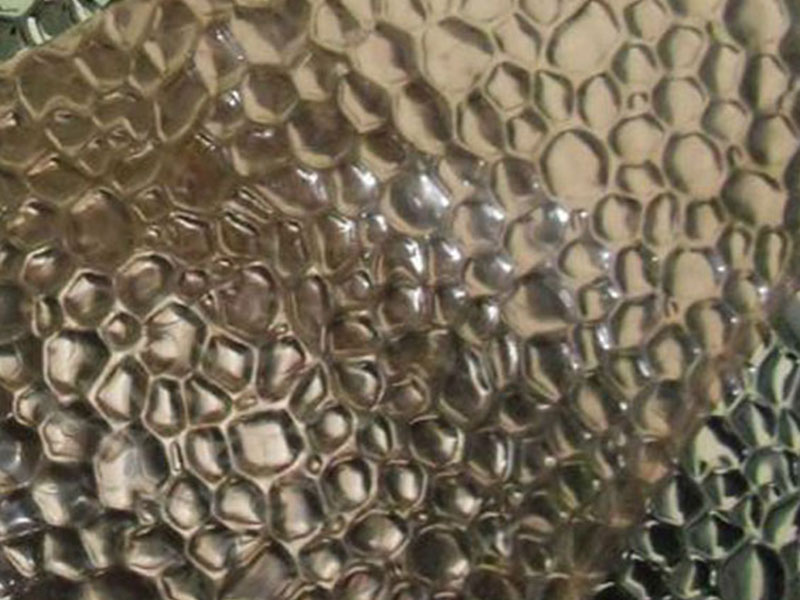

Alloy 3003 h14 stucco embossed aluminum sheet
Most people meet aluminum as a promise: light weight, clean appearance, corrosion resistance, and a kind of quiet reliability. But alloy 3003 H14 stucco embossed aluminum sheet feels less like a promise and more like a decision. It is aluminum that has been asked to do more than "look good." The stucco pattern turns the surface into a functional texture, and the H14 temper turns the metal into a practical compromise between formability and strength. Together, they create a sheet that is surprisingly "architectural" even when used in purely industrial places-refrigeration panels, trailer skins, insulation jacketing, HVAC cladding, marine trim, and equipment housings.
What 3003 Really Brings to the Table
Alloy 3003 belongs to the Al-Mn family. Manganese is the quiet hero here: it improves strength over pure aluminum without making the sheet temperamental to form or weld. 3003 is not a high-strength structural alloy; it is a high-usability alloy-stable, forgiving, and widely available in coil and sheet.
In day-to-day fabrication, that translates to predictable bending, consistent performance in roll forming, and good resistance to atmospheric corrosion. It also means that when the sheet gets embossed, the base metal is less likely to crack in the valleys and peaks of the pattern compared with some stronger but less formable tempers.
H14 Temper: A Practical Middle Ground
"H14" indicates a strain-hardened temper at roughly half-hard strength. In plain terms, the sheet has been cold worked to gain strength, but not so much that it becomes brittle or difficult to form.
This is why H14 is often chosen for stucco embossed sheet. Embossing itself is a forming step, and then the customer often wants to do more forming-hemming edges, bending flanges, making corner folds, rolling panels. H14 keeps the material stiff enough to feel solid in service, yet workable enough to fabricate without drama.
Typical expectations for 3003 H14 include:
- Better dent resistance than soft tempers such as H12 or O (annealed)
- Less springback and less "oil canning" than very soft sheet in many panel applications
- Still suitable for common shop forming methods when correct bend radii are used
Stucco Embossing: A Surface That Solves Problems
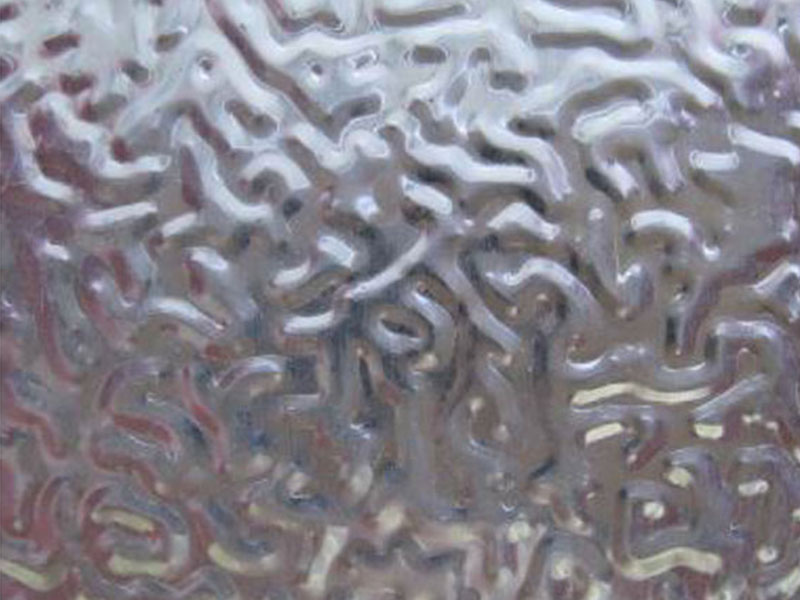
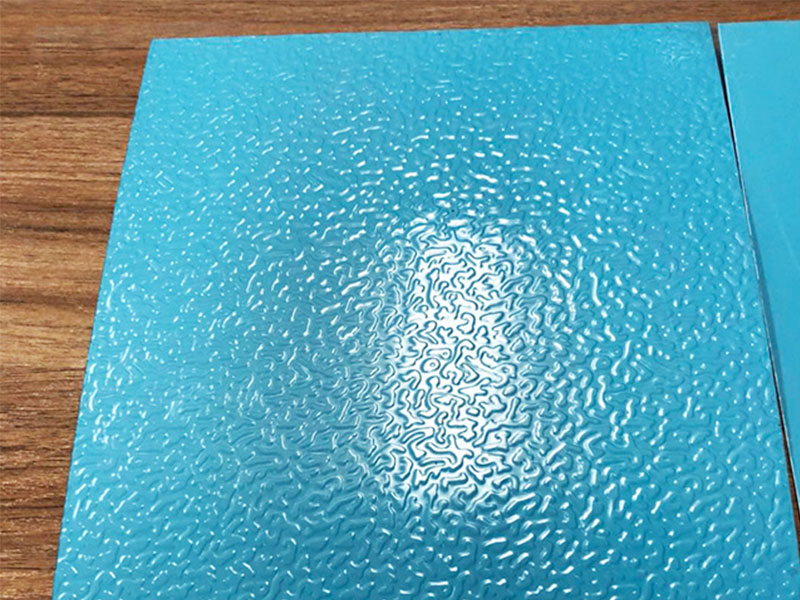
Stucco embossing is often a repeating, pebbled pattern produced by embossing rolls. It is not only there for looks.
It changes several practical outcomes:
The surface hides small scratches and handling marks. On flat mill finish sheet, a minor scuff can look like damage; on stucco, it becomes part of the texture.
The surface diffuses light. In bright sun or under showroom lighting, stucco reduces glare and gives a softer visual impression.
The pattern adds local stiffness. While embossing does not "turn thin sheet into thick plate," it does increase resistance to minor waviness and can help panels feel more rigid.
It also affects friction. A stucco pattern can be easier to grip and less prone to sticking during stacking, depending on coatings and interleaving.
This is why the material feels so at home in appliance and refrigeration contexts: it looks clean longer, it tolerates transport, and it doesn't punish you for being human around it.
Standards and Practical Procurement Notes
For buyers who want the paperwork to match the product, 3003 sheet and coil are commonly supplied to recognized standards such as ASTM B209 for aluminum and aluminum-alloy sheet and plate. Embossing requirements are usually controlled by agreement-pattern type, depth, appearance class, and which side is embossed.
Common ordering parameters worth specifying in a purchase order include:
- Alloy and temper: 3003 H14
- Base thickness and tolerance
- Embossed side requirement: one side stucco / two sides stucco
- Finish: mill finish, or prefinished (painted, PVDF, PE), or anodized when applicable
- Coil ID/OD if supplied in coil, and maximum coil weight
- Protective film requirement if appearance is critical
- Application environment: indoor, outdoor, coastal, chemical exposure, food-contact considerations
If the sheet will be deep drawn or aggressively formed, some buyers choose softer tempers, but for general panel work H14 is the common "sweet spot."
Chemical Composition (Typical Limits)
Below is a typical chemical composition table for AA 3003 (values in weight percent). Actual mill certificates should be used for compliance.
| Element | Composition (wt%) |
|---|---|
| Silicon (Si) | 0.60 max |
| Iron (Fe) | 0.70 max |
| Copper (Cu) | 0.05–0.20 |
| Manganese (Mn) | 1.0–1.5 |
| Zinc (Zn) | 0.10 max |
| Others (each) | 0.05 max |
| Others (total) | 0.15 max |
| Aluminum (Al) | Remainder |
This chemistry is part of why 3003 behaves so consistently across suppliers: it is a mature, widely produced alloy with a stable processing window.
Typical Mechanical Properties (Guidance Values)
Mechanical properties vary with thickness, processing route, and embossing effects, but typical values for 3003 H14 sheet are often in the following range:
| Property | Typical value |
|---|---|
| Tensile strength | 140–180 MPa |
| Yield strength (0.2% offset) | 115–145 MPa |
| Elongation (in 50 mm) | 4–10% |
Embossing may slightly change measured values depending on how the specimen is prepared and whether thickness is reported as base gauge or post-emboss effective profile. In practice, design should be based on certified base material properties and appropriate safety factors.
Forming, Joining, and Finishing: How to Make It Behave
In fabrication, 3003 H14 is friendly, but it still prefers a respectful approach.
For bending, use tooling that supports the textured surface to avoid flattening the stucco peaks on the visible side. If appearance matters, keep the embossed face on the outside of the bend radius when possible, and avoid sharp radii that concentrate strain in the embossed valleys.
For welding, 3003 is generally weldable with common processes such as TIG and MIG, though appearance and distortion control will matter on embossed surfaces. Choose filler metal based on the full assembly requirements; many shops use common Al-Si fillers for crack resistance, but corrosion and finish compatibility should also be considered.
For corrosion resistance, 3003 performs well in typical atmospheric environments. In aggressive chemical exposure, confirm compatibility; aluminum can be vulnerable to strong alkalis and certain chemicals. If used outdoors, coatings can shift the sheet from "durable" to "long-lived," especially in coastal or industrial air.
Why Customers Keep Choosing It
The most interesting thing about alloy 3003 H14 stucco embossed aluminum sheet is not any single property. It is the way the properties cooperate.
It is light enough to move and install without turning every project into a lifting plan. It is strong enough to stay flat and feel intentional. It is textured enough to look good after shipping and handling. It is common enough to source without bespoke lead times. And it is forgiving enough that fabricators don't need perfect conditions to get good results.
In other words, it is not aluminum that demands attention; it is aluminum that protects your attention for the parts of the project that truly need it. That is the hidden value of stucco embossed 3003 H14: a surface that quietly manages reality so the product can keep looking, fitting, and performing like it was meant to.
https://www.aluminumplate.net/a/alloy-3003-h14-stucco-embossed-aluminum-sheet.html