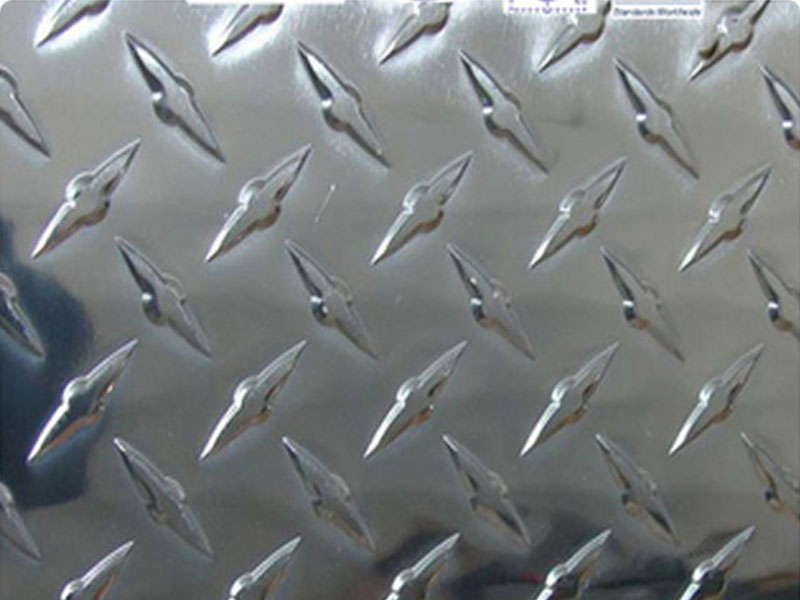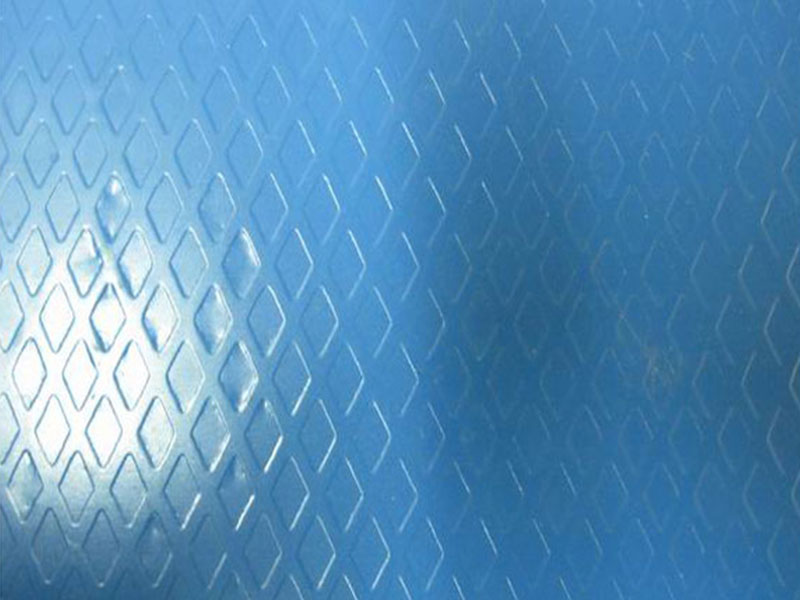

Aluminium checkered plate
Aluminium Checkered Plate: The "Grip-and-Guard" Material That Works While You Walk
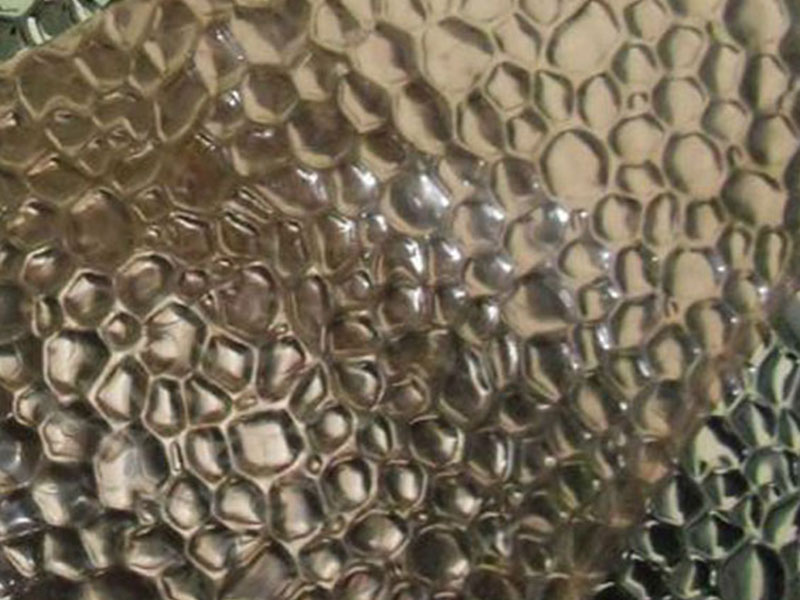
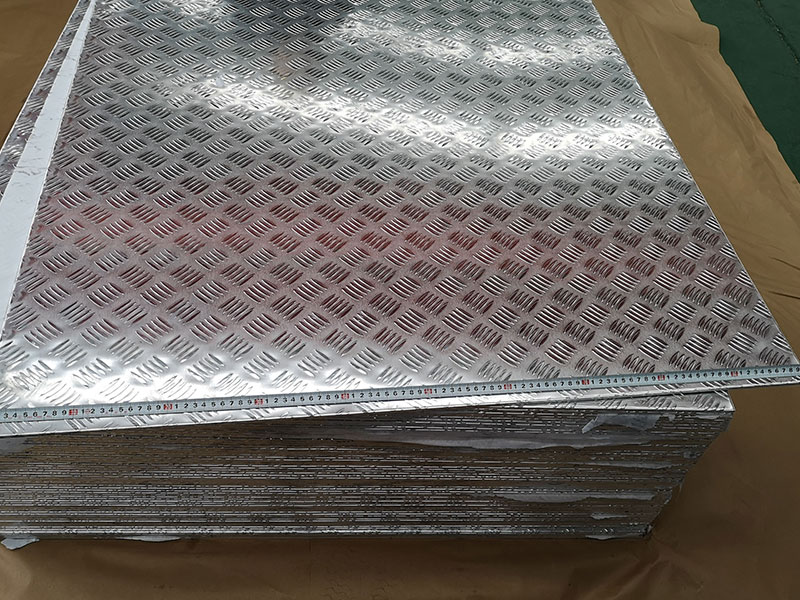
Aluminium checkered plate (also called aluminium tread plate or aluminium diamond plate) is often treated as a simple anti-slip sheet. In reality, its value is more interesting: it is a surface-engineered material that combines traction, wear resistance, corrosion performance, and lightweight strength in one product. If flat aluminium sheet is the "structure," then checkering is the "behavior"-a deliberate geometry that changes how the metal interacts with people, water, dirt, wheels, and impact.
What the Checkered Pattern Actually Does (Beyond "Anti-Slip")
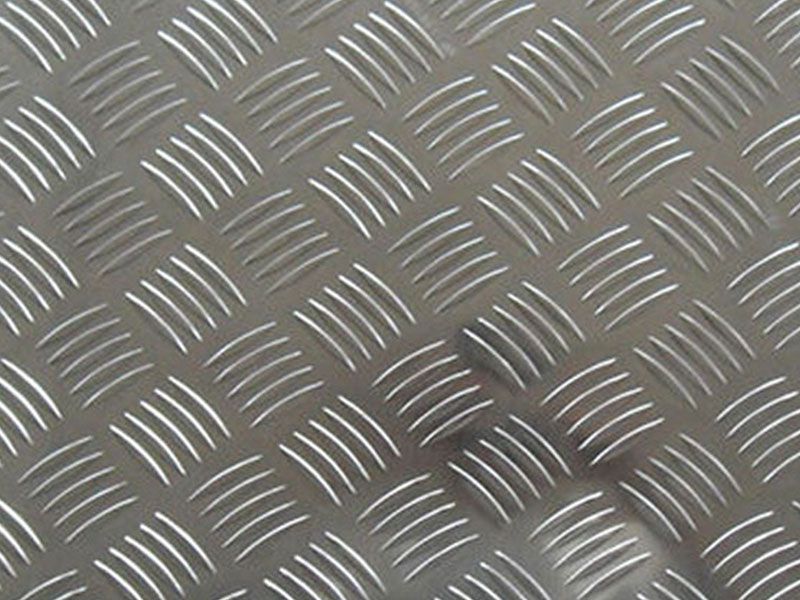
The raised pattern is a mechanical interface. It creates a higher-friction contact patch and provides channels for liquids and debris to move away from the foot or wheel. That's why checkered plate performs well in wet loading bays, on ramps, or on service vehicle steps.
The embossing also stiffens the sheet. Even without increasing thickness, the pattern increases resistance to local denting and "oil-canning" (that flexing sensation on thin floors). Think of it as adding micro-ribs across the surface. This is why aluminium tread plate is widely used for floors, platforms, truck bodies, and walkways where weight savings are critical but the surface must feel solid.
Another underappreciated function is visual safety. The reflective highlights created by the raised lugs improve visibility under harsh lighting, dust, or rain. In industrial spaces, that subtle optical contrast is a safety feature.
Where It's Used: Applications That Match the Material's Strengths
Aluminium checkered plate earns its place where three needs overlap: traction, corrosion resistance, and low weight.
Common applications include:
- Vehicle flooring, utility truck decks, tool box cladding, step covers, trailer ramps
- Marine gangways, dock walkways, ship ladders and service platforms (where corrosion matters and weight is costly)
- Industrial mezzanines, stairs, catwalks, drainage-prone service areas, machine room floors
- Architectural trims, kick plates, protective wall lining in warehouses, elevators, and food logistics centers
- Cold-chain and hygiene-adjacent environments where frequent cleaning requires a corrosion-resistant substrate
If you're comparing it to carbon steel checker plate, the performance trade is straightforward: aluminium is lighter and more corrosion resistant; steel is stiffer at equal thickness and can be cheaper but usually needs coating and maintenance.
Technical Parameters Customers Should Confirm
Even when two plates "look the same," their performance can differ due to alloy, temper, and pattern geometry. parameters include:
- Alloy and temper (example: 5052-H32, 6061-T6, 3003-H22)
- Base thickness and total thickness (including raised pattern). Many buyers specify nominal thickness but forget the tread height affects fit-up.
- Pattern type and tread height. Common patterns include 5-bar (quintet) and diamond. Tread height varies by mill practice.
- Sheet size and flatness tolerance. Flooring and paneling require good flatness to avoid rocking or gaps.
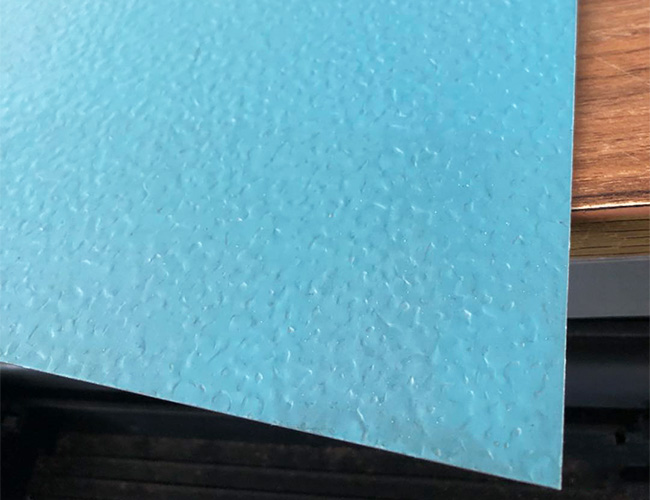
- Surface finish and protection film. Mill finish is common; some projects prefer bright finish, anodized, or coated.
- Edge condition and cutting method. Laser, waterjet, plasma, or shear can affect burrs and dimensional accuracy.
Typical thickness ranges in the market run from about 1.0 mm to 6.0 mm base thickness, with thicker plate used for heavy-duty ramps or high-impact decks. Popular widths are 1000–1500 mm, with lengths up to 6000 mm or supplied as cut-to-size.
Alloy Selection: Matching Chemistry to Function
Choosing aluminium checkered plate is really choosing the alloy system behind it. Each alloy family behaves differently in bending, corrosion, and load-bearing.
- 3003 (Al-Mn) is a classic for general-purpose tread plate. It forms easily and resists atmospheric corrosion well, making it suitable for building protection panels and light-duty flooring.
- 5052 (Al-Mg) is the go-to when corrosion and fatigue performance matter, especially in marine or de-icing salt exposure. It also has better strength than 3003 at comparable temper.
- 6061 (Al-Mg-Si) is used when higher structural strength and machining performance are needed. In checkered form it's common for engineered platforms and components, though formability is lower than 3003/5052 in harder tempers.
Tempering: Why the Same Alloy Can Feel "Soft" or "Springy"
Temper is not marketing language-it controls yield strength, dent resistance, and how the plate behaves during fabrication.
- H14/H22/H24 tempers (strain-hardened) are common for 3003 and 5052 tread plate. They balance formability with moderate strength, ideal for bending, light forming, and general fabrication.
- H32 is widely used in 5052 because it stabilizes mechanical properties and improves resistance to stress corrosion cracking compared with some other work-hardened conditions.
- T6 (solution heat-treated and artificially aged) is typical for 6061 when high strength is needed. It's excellent for load-bearing but less forgiving in tight-radius bends.
If your application involves bending flanges, wrapping edges, or forming around corners, a softer temper can reduce cracking risk. If it's a flat deck where dent resistance and stiffness matter more than forming, a harder temper often performs better.
Implementation Standards and Common Specifications
Aluminium tread/checkered plate is typically produced and traded under widely recognized standards. The exact standard used can vary by region and project:
- ASTM B209 (Aluminum and Aluminum-Alloy Sheet and Plate) is commonly referenced for chemical composition, mechanical properties, and dimensional tolerances.
- EN 485 (Europe) is often used for wrought aluminium sheet/plate requirements.
- JIS H4000 series (Japan) may be specified in some supply chains.
In procurement documents, tread plate may be ordered under the sheet/plate standard with additional pattern requirements agreed between buyer and supplier, since tread geometry can be mill-specific. For critical fit or mating parts, confirm whether thickness is measured excluding or including the raised pattern, and define acceptable tread height variation.
Chemical Composition Table (Typical Limits, wt.%)
Below is a practical reference table for common tread-plate alloys. Always confirm with the mill test certificate for your exact batch and standard.
| Alloy | Si | Fe | Cu | Mn | Mg | Cr | Zn | Ti | Al |
|---|---|---|---|---|---|---|---|---|---|
| 3003 | ≤0.60 | ≤0.70 | 0.05–0.20 | 1.0–1.5 | - | - | ≤0.10 | - | Balance |
| 5052 | ≤0.25 | ≤0.40 | ≤0.10 | ≤0.10 | 2.2–2.8 | 0.15–0.35 | ≤0.10 | - | Balance |
| 6061 | 0.40–0.80 | ≤0.70 | 0.15–0.40 | ≤0.15 | 0.8–1.2 | 0.04–0.35 | ≤0.25 | ≤0.15 | Balance |
Notes on "chemical properties" in use: magnesium-containing alloys like 5052 form stable oxide films and resist chloride-rich environments better than many general-purpose materials. 6061's balanced chemistry enables heat treatment, which is why it can reach higher strength in T6.
A Distinctive Way to Think About It: Surface Engineering for Real-World Abuse
Aluminium checkered plate succeeds because it's designed for abuse you can't easily model on paper: wet boots, sand, wheel loads, dropped tools, cleaning chemicals, and constant traffic. Its pattern turns a smooth sheet into a functional interface. Its alloy and temper decide whether that interface is merely "good enough" or quietly reliable for years.
For fast buying decisions, match the plate to the environment first, then to the load:
- For general indoor and architectural protection, 3003-H22/H24 is often cost-effective and easy to fabricate.
- For salt, marine air, and de-icing exposure, 5052-H32 is a strong all-around choice.
- For higher structural demand where strength is the priority, 6061-T6 is worth considering with attention to forming limitations.
https://www.aluminumplate.net/a/aluminium-checkered-plate.html