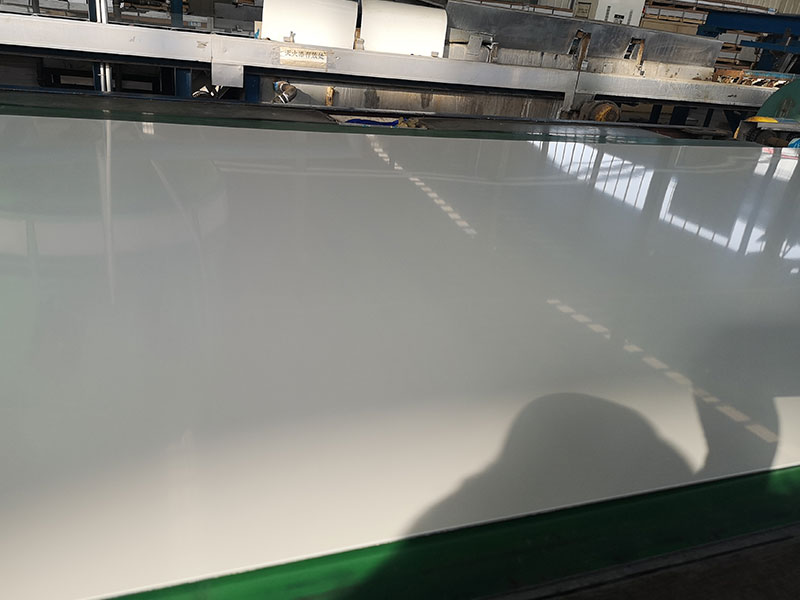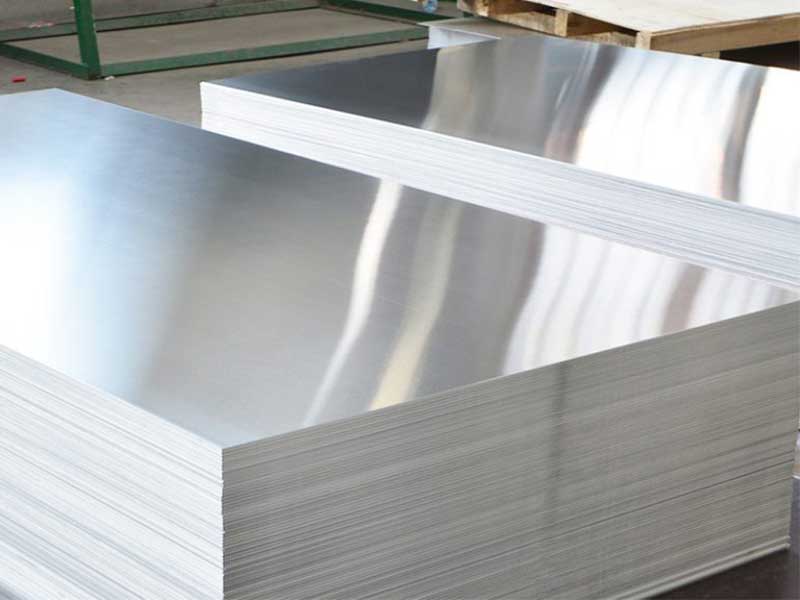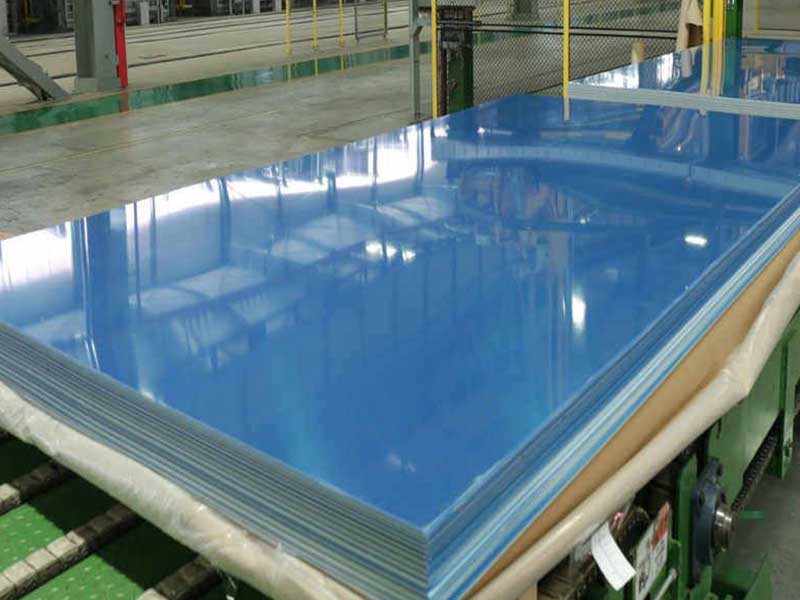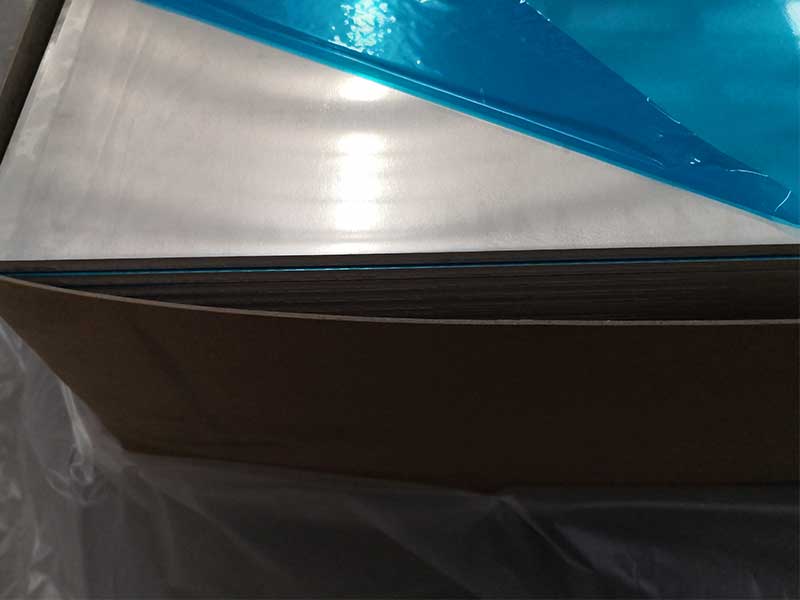

Clad aluminum sheet
Clad aluminum sheet is the quiet problem-solver of the metals world. If monolithic aluminum is a single-note instrument, cladding turns it into a layered chord: one surface is chosen for how it behaves in the environment, while the core is chosen for how it performs under load. The result is not "better aluminum" in a generic sense, but a deliberately engineered compromise that feels almost architectural-like rainproof stone on the outside of a building, structural steel inside, and insulation between.
From a practical alloy specialist's perspective, the most interesting thing about clad aluminum sheet is that it treats corrosion not as an afterthought to be painted over, but as a design input. Instead of asking, "How do we protect this sheet later?" you ask, "What should the skin be, so the sheet protects itself from the first day?" That shift in thinking is why cladding remains widely used in aerospace skins, marine-facing structures, heat exchangers, transportation panels, and any application where the surface lives a harder life than the interior.
What "clad" actually means in aluminum sheet
A clad aluminum sheet is a layered product where a thin aluminum alloy layer is metallurgically bonded to one or both sides of a thicker core alloy. The cladding is not a coating in the paint or plating sense; it is bonded during rolling so the interface becomes integral. In many industrial products, the cladding is a high-purity aluminum or a specially selected alloy that is more corrosion-resistant or sacrificial relative to the core.
Common terms you will see include:
- Alclad: traditionally high-purity aluminum cladding over a high-strength core (often 2xxx series), famously used in aircraft.
- One-side clad: one surface optimized, the other left as core or different cladding, useful when only one face sees severe corrosion or brazing conditions.
- Brazing sheet: a form of clad sheet where one side is a brazing filler alloy (often Al-Si) that melts during brazing to form joints, while the core stays solid.
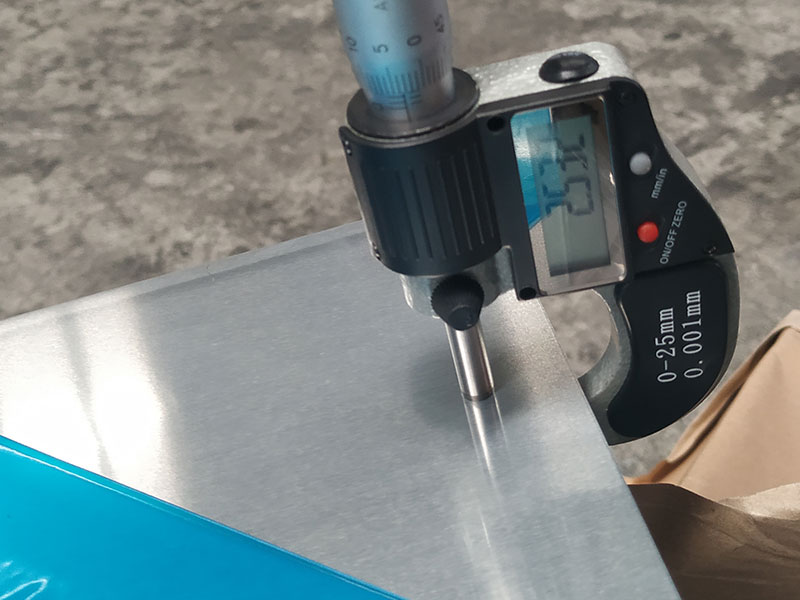
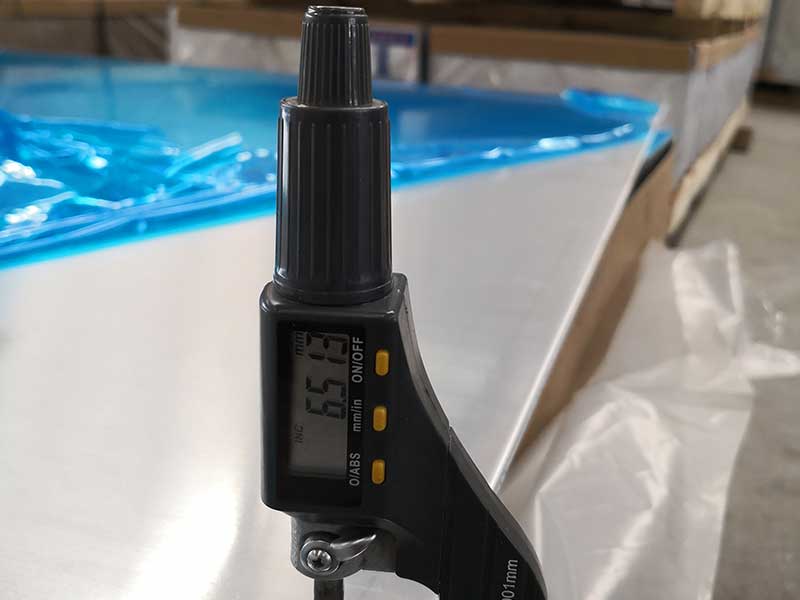
Typical cladding thickness is modest compared to the core. Many commercial clad sheets use cladding around a few percent of total thickness per side, often around 2% to 10% per side, depending on the product and the corrosion life or brazing requirement. Too thin and the "skin" disappears after forming, sanding, or service wear; too thick and you sacrifice strength, cost, and sometimes dimensional stability.
The unique value: a "designed skin" with predictable aging
Clad sheet shines when you accept a hard truth: most products don't fail because the alloy is too weak in the lab. They fail because the surface becomes unpredictable in the field-pitting starts under deposits, intergranular attack follows heat-affected zones, salt spray finds crevices, cleaning chemicals linger, or galvanic couples form at fasteners.
Cladding addresses this by making the surface composition stable and intentional. In high-purity aluminum cladding, the surface forms a robust oxide and tends to corrode more uniformly rather than pit aggressively. In sacrificial cladding designs, the skin is selected to be anodic to the core so it preferentially corrodes, protecting the structural interior the way a sacrificial anode protects a ship hull.
This is why clad aluminum sheet can feel like "time management" for corrosion. It doesn't pretend corrosion won't happen; it controls where it happens first and how it progresses.
Manufacturing and bonding integrity
Most clad aluminum sheet is produced by roll bonding, where the cladding and core are stacked, surface-prepared, and hot rolled so the layers bond. The interface quality is everything. In real production, the variables include:
- Surface preparation: oxide removal and cleanliness before bonding
- Hot rolling temperature window: sufficient to promote bonding without excessive diffusion or surface tearing
- Reduction ratio and pass schedule: ensures uniform bond and final gauge control
- Post-rolling heat treatment: depending on core alloy and final temper
For critical applications, bond integrity is evaluated by bend tests, peel or shear methods, metallographic inspection, and ultrasonic inspection. A good clad sheet behaves like one material in forming: no blistering, no layer separation, no "orange peel" tied to mismatched deformation.
Temper, heat treatment, and what the cladding "permits"
Cladding is not a free lunch. It affects heat transfer during processing, changes surface response during forming, and can constrain certain finishing steps. Still, most users select clad sheet precisely because it expands the usable window: it allows a high-strength core alloy to be used in environments where it would otherwise be too corrosion-prone.
Typical tempers follow normal aluminum standards, and the core often governs the temper designation:
- O (annealed): maximum formability, used when deep drawing or complex shaping is required
- H tempers: strain-hardened, common for non-heat-treatable cores and general sheet applications
- T tempers: solution heat treated and aged (such as T3, T4, T6), common when the core is heat-treatable and strength is critical
Implementation and designation commonly align with widely used standards such as ASTM B209 for aluminum sheet and plate, EN 485 series in Europe for wrought aluminum products, and aerospace specifications when applicable. For brazing sheet products, industry practice often references brazing-specific standards and customer OEM requirements, because braze behavior is as important as tensile strength.
Practical alloy pairings you'll encounter
The "personality" of clad aluminum sheet comes from the pairing: core for strength or stiffness, cladding for corrosion or joining.
Here are representative alloy families and why they get paired:
- 2xxx core with high-purity cladding: high strength with improved surface corrosion resistance; historically a backbone for aircraft skins.
- 3xxx core with Al-Si cladding: brazing sheet for heat exchangers; the cladding melts and flows while the core holds shape.
- 5xxx core with corrosion-oriented cladding: used when marine exposure and weldability matter, while cladding may be tuned for galvanic behavior or surface stability.
Chemical composition snapshot (typical ranges)
Actual chemistry depends on product standard and mill practice. The table below provides typical composition ranges for commonly discussed alloys in clad systems. Always confirm with a mill test certificate for procurement.
| Alloy | Si (%) | Fe (%) | Cu (%) | Mn (%) | Mg (%) | Zn (%) | Ti (%) | Al |
|---|---|---|---|---|---|---|---|---|
| 1100 (high purity commercial) | ≤0.95 | ≤0.95 | 0.05–0.20 | ≤0.05 | ≤0.05 | ≤0.10 | ≤0.05 | Remainder |
| 1050A (higher purity) | ≤0.25 | ≤0.40 | ≤0.05 | ≤0.05 | ≤0.05 | ≤0.07 | ≤0.05 | Remainder |
| 3003 (Mn alloy) | ≤0.60 | ≤0.70 | 0.05–0.20 | 1.0–1.5 | ≤0.10 | ≤0.10 | ≤0.10 | Remainder |
| 3005 (Mn-Mg) | ≤0.60 | ≤0.70 | ≤0.30 | 1.0–1.5 | 0.20–0.60 | ≤0.25 | ≤0.10 | Remainder |
| 5052 (Mg alloy) | ≤0.25 | ≤0.40 | ≤0.10 | ≤0.10 | 2.2–2.8 | ≤0.10 | ≤0.10 | Remainder |
| 6061 (Mg-Si) | 0.4–0.8 | ≤0.70 | 0.15–0.40 | ≤0.15 | 0.8–1.2 | ≤0.25 | ≤0.15 | Remainder |
| 2024 (Cu-Mg) | ≤0.50 | ≤0.50 | 3.8–4.9 | 0.3–0.9 | 1.2–1.8 | ≤0.25 | ≤0.15 | Remainder |
| 4045 (braze cladding Al-Si) | 9.0–11.0 | ≤0.80 | ≤0.30 | ≤0.05 | ≤0.05 | ≤0.20 | ≤0.20 | Remainder |
In corrosion-driven cladding, you often see 1xxx series as cladding because purity improves corrosion behavior. In brazing sheet, 4045 or 4343 (both Al-Si families) are common cladding choices because of their melting range and flow characteristics.
What to watch for in forming, machining, and finishing
Clad sheet rewards careful handling because the surface layer is thin by design.
During forming, aggressive tooling marks, galling, or overstretching can locally thin the cladding and expose the core. This is not always catastrophic, but it undermines the whole point of the product. Lubrication, clean dies, and controlled radii matter more than usual.
During machining or sanding, it's easy to remove cladding unintentionally. If a drawing calls for corrosion performance on the surface, specify allowable material removal or restrict finishing operations.
During joining, welding can disrupt the cladding and change local corrosion behavior. For many clad applications, designers prefer riveting, bonding, or controlled welding procedures paired with sealants. Brazing sheet is its own world: the cladding is meant to melt, so cleanliness and flux control become the main battleground.
Buying clad aluminum sheet like you mean it
A good purchase specification reads like a story of the surface's future life. Define whether cladding is on one or both sides, the cladding alloy, the cladding thickness (or percentage), and the required temper. Call out the governing standard such as ASTM B209 or EN 485, add inspection requirements if bond integrity is critical, and ensure the certificate reports both core and cladding chemistry.
Clad aluminum sheet is not merely "aluminum with a protective layer." It is a deliberate separation of duties: the core carries the load, the skin negotiates with the environment. When you view it that way, you stop treating corrosion resistance, brazability, and appearance as add-ons-and start treating them as built-in features that you purchased on purpose.