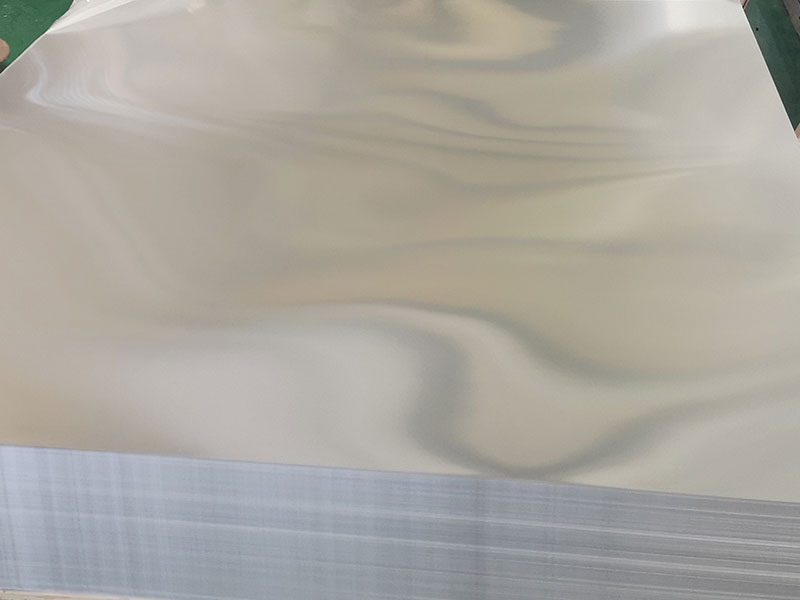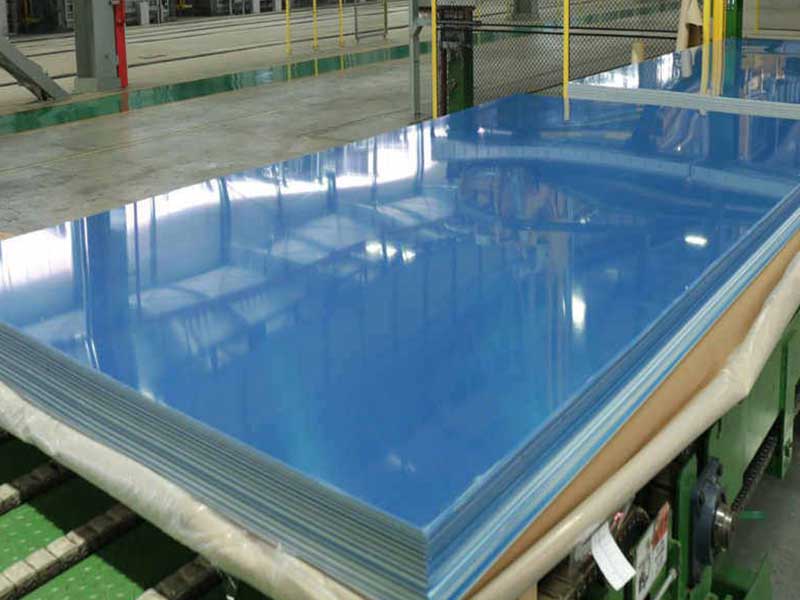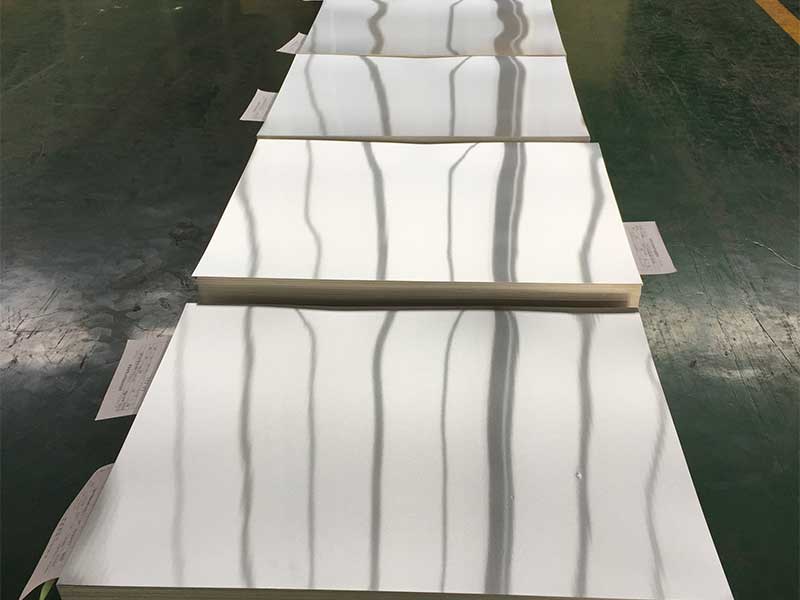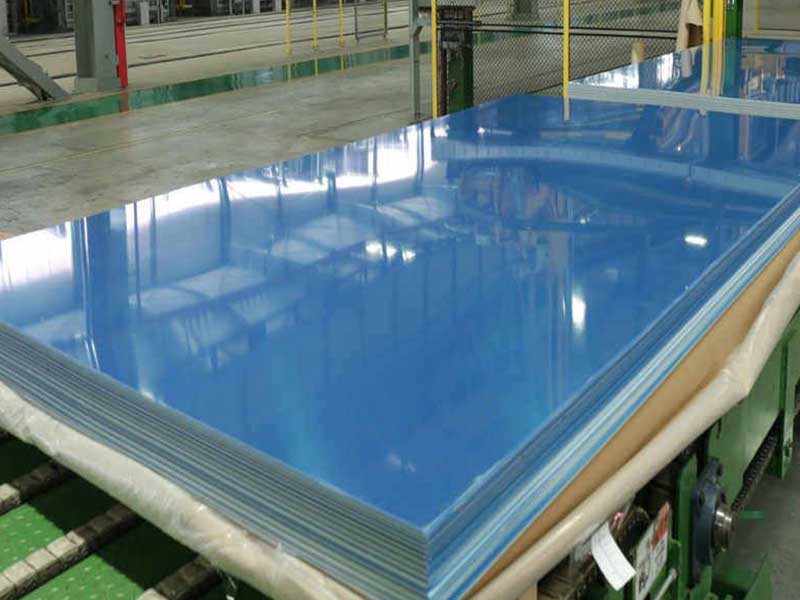

Aluminum Sheet plate For Alloy 6061
Aluminum Sheet Plate For Alloy 6061 is one of the most widely used heat-treatable aluminum products for structural, industrial, and general engineering applications. Known for its excellent balance of strength, corrosion resistance, machinability, and weldability, 6061 aluminum sheet and plate is a reliable choice for customers who need a versatile material that performs well in demanding environments.
This alloy belongs to the Al-Mg-Si series and is commonly supplied in tempers such as T4, T6, and T651. It is suitable for machining parts, transportation equipment, structural frames, marine components, tooling, and many custom fabrication projects. For buyers seeking an aluminum product that combines practical performance with broad availability, 6061 sheet plate remains a leading option.
| Item | Details |
|---|---|
| Alloy | 6061 Aluminum |
| Alloy Type | Aluminum-Magnesium-Silicon |
| Common Forms | Sheet, plate, flat rolled products |
| Typical Tempers | O, T4, T6, T651 |
| Main Advantages | Good strength, good corrosion resistance, excellent machinability, good weldability |
| Typical Use Industries | Aerospace, transportation, marine, construction, machinery, electronics |
| Surface Finish | Mill finish, polished, anodized, coated |
| Standard Features | Heat-treatable, versatile, easy to fabricate |
What Is 6061 Aluminum Sheet Plate?
6061 aluminum sheet plate is a precipitation-hardened alloy that offers a strong combination of mechanical performance and fabrication ease. It is often selected when pure corrosion resistance is not the only priority and a higher level of strength is required than that offered by many non-heat-treatable alloys.
Compared with softer commercial aluminum grades, 6061 provides much better structural capability. Compared with very high-strength aerospace alloys, it offers easier welding and better general corrosion resistance. This balance makes it a practical material for both industrial users and OEM buyers.
The term sheet usually refers to thinner rolled material, while plate indicates heavier gauges. Both forms share the same alloy chemistry, but dimensions, flatness, and use cases may differ depending on the production route and final specification.
Features
| Feature | Benefit to Customer |
|---|---|
| Medium-to-high strength | Suitable for structural and load-bearing parts |
| Excellent machinability | Ideal for CNC machining and precision components |
| Good corrosion resistance | Performs well in outdoor and mildly corrosive environments |
| Good weldability | Can be fabricated into frames, tanks, supports, and assemblies |
| Heat-treatable | Strength can be enhanced through temper control |
| Good formability in some tempers | Easier shaping in O or T4 condition |
| Attractive surface finishing potential | Suitable for anodizing and decorative applications |
| Broad market availability | Easier sourcing in many sizes and thicknesses |
Common Applications
6061 aluminum sheet plate is used across a wide range of industries because it is dependable, cost-effective, and adaptable.
| Industry | Typical Applications |
|---|---|
| Transportation | Truck bodies, trailers, rail components, automotive parts |
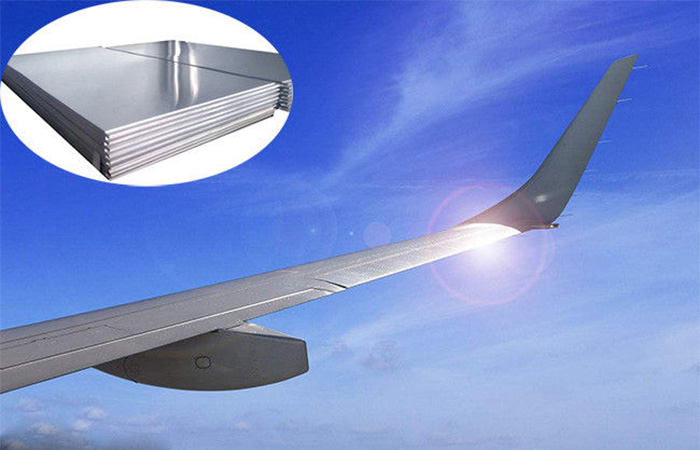
| Aerospace | Non-critical aircraft structures, fittings, panels |
| Marine | Boat fittings, gangways, structural parts, docks |
| Construction | Platforms, stair components, framing, walkways |
| Machinery | Base plates, machine parts, brackets, fixtures |
| Electronics | Enclosures, heat sinks, support panels |
| General Fabrication | Tanks, covers, cabinets, tooling plates, custom assemblies |
Its versatility makes it especially useful when a project requires a material that can be cut, machined, welded, and finished without excessive difficulty.
Chemical Composition
The chemical composition of 6061 aluminum is tightly controlled to deliver stable mechanical and corrosion performance.
| Element | Composition % |
|---|---|
| Silicon (Si) | 0.40–0.80 |
| Iron (Fe) | 0.00–0.70 |
| Copper (Cu) | 0.15–0.40 |
| Manganese (Mn) | 0.00–0.15 |
| Magnesium (Mg) | 0.80–1.20 |
| Chromium (Cr) | 0.04–0.35 |
| Zinc (Zn) | 0.00–0.25 |
| Titanium (Ti) | 0.00–0.15 |
| Others, each | 0.00–0.05 |
| Others, total | 0.00–0.15 |
| Aluminum (Al) | Remainder |
Composition Notes
| Element | Role in Alloy Performance |
|---|---|
| Magnesium + Silicon | Main strengthening elements, form Mg2Si |
| Copper | Contributes to strength |
| Chromium | Helps control grain structure and improves toughness |
| Aluminum base | Keeps density low and corrosion resistance favorable |
Typical Mechanical Properties
Mechanical properties vary by thickness, temper, and product standard. The values below are typical reference ranges for general commercial supply.
| Temper | Tensile Strength MPa | Yield Strength MPa | Elongation % | Hardness HB |
|---|---|---|---|---|
| O | 124–172 | 55 max | 20–25 | 30–45 |
| T4 | 205–290 | 110–180 | 14–20 | 55–75 |
| T6 | 260–310 | 240–276 | 8–12 | 85–95 |
| T651 | 260–310 | 240–276 | 8–12 | 85–95 |
Physical Properties
| Property | Value |
|---|---|
| Density | 2.70 g/cm³ |
| Melting Range | 582–652°C |
| Elastic Modulus | 68.9 GPa |
| Electrical Conductivity | Approx. 40–43 % IACS |
| Thermal Conductivity | Approx. 167 W/m·K |
| Coefficient of Thermal Expansion | 23.6 µm/m·K |
| Specific Heat | Approx. 896 J/kg·K |
These physical characteristics make 6061 suitable for parts requiring low weight, good thermal response, and moderate electrical conductivity.
Temper Conditions
The temper of 6061 aluminum sheet plate strongly influences how the material behaves during fabrication and in final service.
| Temper | Description | Typical Use |
|---|---|---|
| O | Annealed, soft condition | Deep forming, bending, shaping |
| T4 | Solution heat-treated and naturally aged | Applications needing later forming and moderate strength |
| T6 | Solution heat-treated and artificially aged | General structural and machined parts |
| T651 | T6 with stress relief by stretching | Precision plate, machining applications, reduced distortion |
For many customers, 6061-T6 is the most popular choice because it provides strong all-around performance. 6061-T651 plate is often preferred for thicker products used in machining because it helps reduce residual stress and improves dimensional stability.
Technical Specifications
Actual supply ranges depend on the mill, standard, and market availability. Typical commercial dimensions are shown below.
| Parameter | Typical Range |
|---|---|
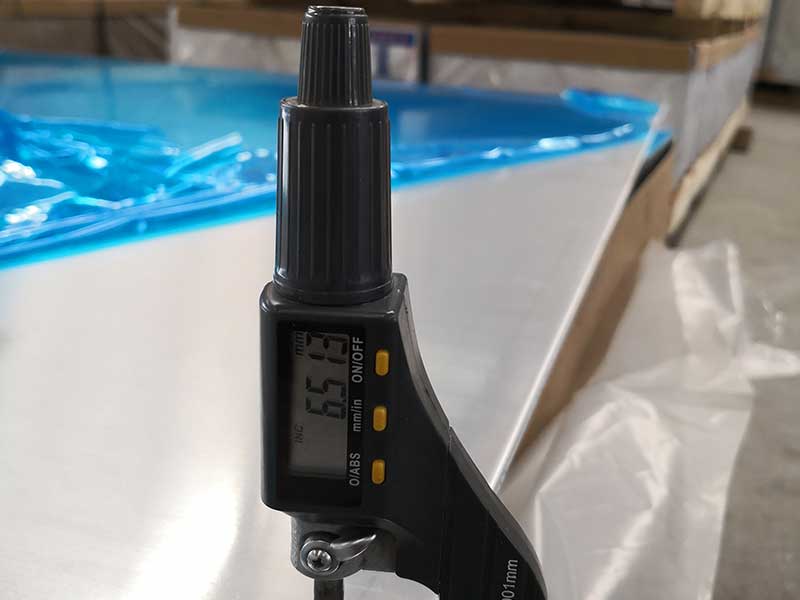
| Thickness, sheet | 0.3 mm to 6.0 mm |
| Thickness, plate | 6.0 mm to 250 mm |
| Width | 500 mm to 2500 mm |
| Length | 1000 mm to 12000 mm |
| Surface | Mill finish, brushed, polished, anodizing quality |
| Processing | Cutting, sawing, shearing, CNC machining, drilling, welding |
| Standards | ASTM B209, AMS, EN standards, GB standards |
Corrosion Resistance and Surface Performance
6061 aluminum sheet plate offers good atmospheric corrosion resistance and performs well in industrial and marine-adjacent environments when properly designed and maintained. It is not as corrosion-resistant as some marine-focused alloys such as 5052 or 5083 in continuous salt exposure, but it remains a strong option for many outdoor applications.
| Environment | Performance |
|---|---|
| Indoor dry service | Excellent |
| Outdoor atmosphere | Good to excellent |
| Mild industrial environment | Good |
| Marine splash zone | Fair to good, with proper protection |
| Strong alkaline or acidic media | Limited, depends on conditions |
Surface treatments can further improve durability and appearance.
| Surface Treatment | Purpose |
|---|---|
| Anodizing | Better corrosion resistance and decorative finish |
| Powder coating | Enhanced weatherability and color options |
| Brushing/polishing | Improved appearance |
| Protective film | Prevents scratches during transport and fabrication |
Fabrication Performance
One reason 6061 remains highly popular is its reliable workshop performance.
| Fabrication Method | Performance |
|---|---|
| Machining | Excellent |
| Welding | Good |
| Bending | Good in O and T4, more limited in T6 |
| Drilling | Excellent |
| Milling | Excellent |
| Saw cutting | Excellent |
| Anodizing | Good |
| Forming | Moderate, temper dependent |
For customers planning extensive forming or tight-radius bending, softer tempers are usually recommended before final heat treatment. For machined components requiring higher strength, T6 or T651 is generally preferred.
Advantages for Buyers
| Buyer Need | 6061 Solution |
|---|---|
| Lightweight structure | Low density aluminum base |
| Reliable strength | Heat-treatable mechanical performance |
| Easy machining | Good chip formation and dimensional control |
| Welded assemblies | Good weldability for fabrication |
| Visual finish | Suitable for anodized and polished surfaces |
| Wide sourcing options | Commonly stocked worldwide |
Purchasing Considerations
When selecting Aluminum Sheet Plate For Alloy 6061, customers should confirm several practical details before ordering.
| Consideration | Why It Matters |
|---|---|
| Temper | Affects strength, machinability, and bendability |
| Thickness tolerance | Important for machining and assembly fit |
| Flatness | Critical for CNC plate and structural use |
| Surface quality | Matters for visible parts and finishing |
| Standard compliance | Ensures consistency and traceability |
| End use environment | Helps determine whether coating or anodizing is needed |
https://www.aluminumplate.net/a/aluminum-sheet-plate-for-alloy-6061.html