
CTP digital thermal ctp plate offset printing for ctp plates making machine
CTP Digital Thermal CTP Plate Offset Printing for CTP Plates Making Machine: When Aluminum Becomes a Precision "Data Surface"
In modern offset printing, the plate is no longer just a carrier of an image-it is a calibrated interface between digital information, laser energy, chemistry, and mechanical pressure. A CTP digital thermal CTP plate used on a CTP plates making machine is best understood as a controlled reaction layer built on an engineered aluminum foundation. Its real value is not only "it can be imaged," but that it can be imaged predictably, processed cleanly, and run stably on press at high speed.
What a Thermal CTP Plate Actually Does in Offset Printing
A thermal CTP plate is designed for 830 nm infrared laser imaging. Instead of relying on visible light sensitivity, the coating responds to heat, which brings two major functional advantages in production environments: stronger resistance to ambient light and generally higher process stability.
In a CTP plates making machine, the thermal laser scans the plate surface and triggers a controlled change in the coating. Depending on the coating type, this may be a positive-working or negative-working mechanism, but the practical outcome is the same: the imaged areas become either more soluble or less soluble during processing, producing a sharp lithographic pattern.
From there, the plate enters offset printing where its functions become very physical:
- Hydrophilic non-image background holds fountain solution and repels ink
- Oleophilic image area accepts ink and transfers it to blanket and paper
- Anodized aluminum + microstructure protects dot edges, resists abrasion, and anchors the coating
When customers talk about "plate quality," they often mean press stability: fast roll-up, consistent dot gain, minimal toning, long run length, and low remake rate. All of that starts with the aluminum CTP plate's substrate structure and coating uniformity.
Core Applications: Where Thermal CTP Plates Fit Best
Thermal CTP plates are widely applied across commercial and packaging segments where repeatability and press uptime matter:
- High-volume commercial offset jobs such as catalogs, magazines, inserts
- Packaging printing requiring strong solid density and stable screening
- Mixed work environments with variable press conditions and long plate storage times
- Plants that want reliable imaging without stringent yellow-light rooms
They are also favored when production wants tighter control over screen reproduction, particularly with higher-line screens and hybrid screening, because thermal imaging tends to deliver stable dot formation with less sensitivity to stray light.
Typical Technical Parameters (Industry-Common Ranges)
Actual values vary by plate model, coating system, and process workflow, but the ranges below reflect common specifications for aluminum-based thermal CTP plates used in offset printing with CTP plates making machines:
Imaging and plate performance
- Laser wavelength: 830 nm thermal IR
- Spectral sensitivity: optimized for 830 nm diode lasers
- Energy for imaging: approximately 110–160 mJ/cm² (model dependent)
- Resolution capability: up to 2400 dpi or higher (CTP device dependent)
- Screen ruling: typically 175–300 lpi supported (workflow dependent)
- Run length: around 80,000–200,000 impressions without baking; higher with baking depending on chemistry and press conditions
- Recommended plate thickness: 0.15 mm, 0.20 mm, 0.30 mm, 0.40 mm (common commercial formats)
Aluminum substrate characteristics
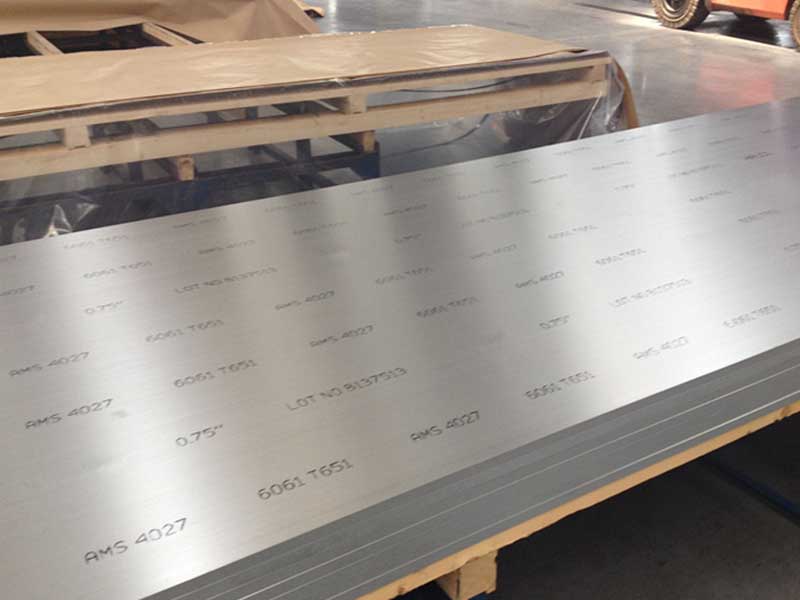
- Alloy families often used: AA1050, AA1060, AA1070, AA1100 (high-purity series)
- Temper conditions: commonly H18, sometimes H19 depending on supplier capability and stiffness needs
- Surface treatment: graining + anodizing (critical to water balance and adhesion)
- Roughness: controlled micro-roughness to balance water retention and dot sharpness
- Anodic layer: engineered thickness for wear resistance and hydrophilicity
These parameters matter because the CTP machine, processor, chemistry, and press are one production ecosystem. A stable plate is the one whose sensitivity window and mechanical profile match the equipment and shop discipline.
Implementation Standards and Quality Expectations
Although plate manufacturing and printing workflows vary globally, most professional thermal CTP plate production aligns with the spirit of widely adopted aluminum and coating quality systems. Common reference points include:
- Aluminum and chemical composition control aligned with ASTM/EN norms for wrought aluminum alloy sheet (composition and mechanical consistency)
- Surface and coating QA governed by ISO-style process management, including traceability, coating weight control, and defect inspection
- Printing process compatibility aligned with mainstream offset standards for density, dot gain, and repeatability expectations in commercial production
What customers should ask for is less about a single certificate and more about repeatability evidence: consistent coating color and weight, stable sensitivity across lots, low pinhole rate, and clean development behavior under standard processor settings.
Alloy Tempering and Why It Matters to Printing Stability
A thermal CTP plate is only as stable as its aluminum base. Tempering is not just about "hardness"; it determines flatness retention, handling resistance, and press fit.
- H18 temper indicates a high level of cold work, resulting in higher strength and stiffness than softer states. This improves plate handling, reduces edge damage, and helps maintain dimensional stability during imaging and mounting.
- High-purity aluminum (1xxx series) is popular because it anodizes uniformly and supports a clean, consistent hydrophilic surface after graining and anodizing.
- Substrate cleanliness and inclusion control affect coating adhesion and can influence imaging uniformity, especially in high-resolution screening.
In practice, the "best alloy" is the one that gives you consistent anodizing response, stable roughness, and predictable press behavior-especially in long runs where abrasion and water balance are unforgiving.
Chemical Properties Table (Typical Aluminum Substrate Composition)
Below is a typical chemical composition range for common 1xxx-series aluminum used in CTP plate substrates. Exact limits depend on the specific grade and supplier control plan.
| Element | Typical Range (wt.%) | Printing-Relevant Role |
|---|---|---|
| Al | Balance (≥ 99.0–99.7) | Base metal; supports uniform anodizing |
| Fe | 0.05–0.40 | Impurity; affects grain/anodize uniformity if high |
| Si | 0.03–0.25 | Impurity; excess can affect surface consistency |
| Cu | 0.00–0.05 | Trace; can influence corrosion behavior |
| Mn | 0.00–0.05 | Trace; minor effect in 1xxx alloys |
| Mg | 0.00–0.05 | Trace; generally kept low in 1xxx substrate |
| Zn | 0.00–0.05 | Trace; kept low for stability |
| Ti | 0.00–0.03 | Grain refiner; controlled for uniformity |
For CTP plate manufacturing, the practical target is high aluminum purity with tightly controlled Fe/Si, because micro-inclusions and surface variability can show up as coating defects, background toning risk, or inconsistent development.
The Real Advantage: Thermal Plates as a "Process Buffer"
A distinctive way to judge thermal CTP plates is to ask how well they absorb real-world variation. In daily production, laser power drifts, processors age, water quality changes, and press operators tune fountain solution differently. A strong thermal plate system acts like a buffer: it maintains clean highlights, solid density, and stable background even when the surrounding conditions are not perfect.
That "buffering" comes from a combination of:
- An anodized, micro-structured aluminum surface that holds water consistently
- A thermal coating designed with a practical exposure latitude
- Reliable adhesion between coating and anodic layer
- Mechanical stiffness and flatness that keep registration stable
What Customers Should Confirm Before Buying
For quick purchasing decisions, focus on compatibility and stability rather than buzzwords. Confirm the plate's wavelength match to your CTP device, typical imaging energy window, recommended processor chemistry and settings, substrate alloy and temper, anodizing quality, thickness tolerance, and run length expectations under your press conditions.
A well-made aluminum thermal CTP plate is not just "printable." It is a carefully engineered surface where metallurgy and chemistry work together so that every plate coming out of the CTP plates making machine behaves like the last one-clean, sharp, and dependable on press.